No Cooling or Heating
A system that runs without producing conditioned air may have an airflow restriction, failed capacitor, electrical fault, refrigerant issue, compressor problem, or heating control failure.
Serving Dallas, Texas & surrounding areas
24/7 Emergency Response
Emergency heating and cooling help when a failed system cannot wait until regular business hours.
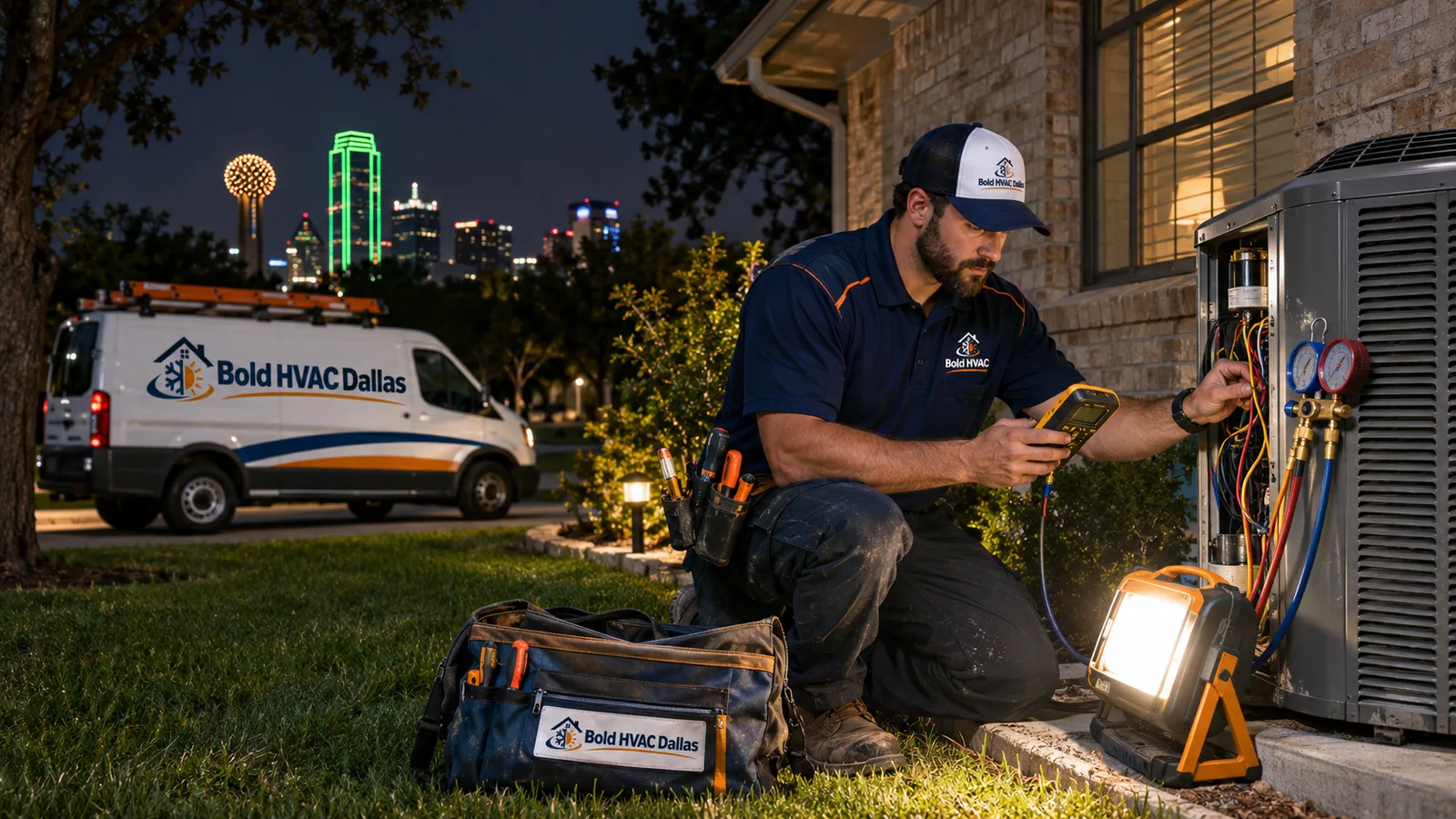
When your air conditioner quits during a hot North Texas night or the heat stops on a cold morning, 24 hour HVAC repair in Dallas provides a direct path to diagnosis and repair. Bold HVAC Dallas responds to urgent residential and commercial heating and cooling problems, including systems that will not start, equipment that runs without changing the indoor temperature, electrical faults, refrigerant-related symptoms, and unsafe heating operation.
Our HVAC service team around Dallas, TX begins by gathering the symptoms, equipment type, and any warning signs you have noticed. A technician then inspects the system, identifies the failed component or operating condition, and explains the recommended work before proceeding. The goal is to restore safe operation during the visit when the required repair and parts make that possible.
Dallas heat puts long run times and heavy demand on cooling equipment. During an outage, close blinds, limit oven use, keep exterior doors shut, and move children, older adults, pets, or anyone with a health condition to a safer indoor environment if temperatures become uncomfortable. Never use an outdoor grill, portable generator, or vehicle engine inside a home, garage, or enclosed area.
A system that runs without producing conditioned air may have an airflow restriction, failed capacitor, electrical fault, refrigerant issue, compressor problem, or heating control failure.
A blank thermostat, tripped breaker, failed contactor, clogged condensate safety switch, damaged control board, or low-voltage fault can prevent startup.
Shut the system off if you smell burning insulation, see smoke, hear arcing, or notice repeated breaker trips. These symptoms require prompt inspection.
A blocked condensate drain, cracked drain pan, frozen evaporator coil, or failed condensate pump can cause water damage near an air handler or furnace.
Ice often points to restricted airflow or a refrigerant-side problem. Turn off cooling and leave the indoor fan running if it operates safely; do not chip ice from the coil.
A gas odor, soot, unusual flame behavior, or a carbon monoxide alarm requires immediate caution. Leave the building when necessary and contact the gas utility or emergency services before HVAC troubleshooting.
Emergency service starts with the controls and power supply. The technician may check thermostat signals, disconnects, breakers, fuses, low-voltage wiring, contactors, capacitors, motors, safety switches, and control-board fault codes. Cooling diagnosis can also include temperature split, static pressure, coil condition, condensate drainage, and refrigerant readings when those tests are relevant.
For a furnace or heat pump, the inspection may cover ignition components, flame sensing, pressure switches, limit controls, blower operation, defrost controls, and auxiliary heat. Gas-fired equipment must complete its ignition and safety sequence correctly. A technician should not bypass a limit switch, pressure switch, or another safety control to keep equipment running.
The diagnosis determines whether the practical next step is an adjustment, cleaning, electrical repair, drain clearing, component replacement, or temporary shutdown for safety. If a specialized part is unavailable overnight, the technician can explain safe interim steps and the follow-up required. Refrigerant is not a routine top-off item; a low charge indicates that system condition and possible leakage need evaluation.
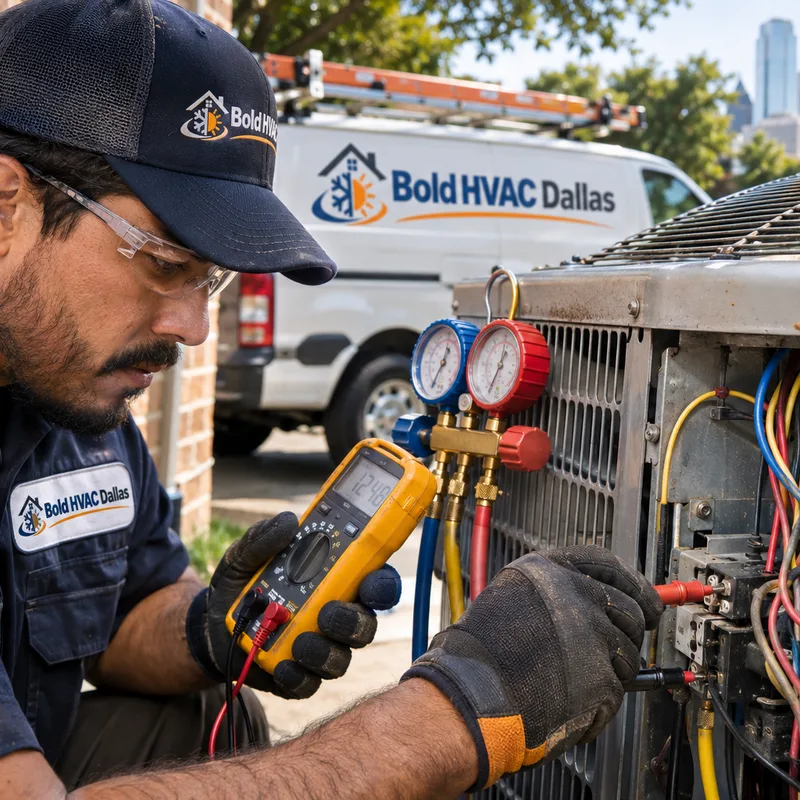
Share whether the equipment is heating, cooling, making unusual sounds, leaking water, producing an odor, or displaying a thermostat code. Mention smoke, gas odors, repeated breaker trips, or carbon monoxide alarms immediately.
Clear a path to the thermostat, indoor unit, electrical panel, and outdoor equipment. Secure pets and avoid opening electrical cabinets or attempting refrigerant work.
The technician checks the equipment sequence and takes the measurements needed to isolate the fault. Diagnosis should distinguish a failed part from an underlying airflow, drainage, wiring, or refrigerant problem.
You receive an explanation of the finding, proposed scope, and price before authorized work begins. If replacement deserves consideration, the immediate safety and comfort options should still be clear.
After repair, the technician operates the system and verifies the affected circuit or component. Depending on the fault, testing may include temperature change, amperage, voltage, drainage, airflow, or the heating safety sequence.
Emergency HVAC repair in Dallas typically costs about $200 to $700 for common diagnostic and repair work, while compressor, refrigerant-circuit, control-board, or major motor repairs can exceed $1,000. These are general, nonbinding ranges rather than a quote. Final price depends on the failed component, equipment type, after-hours timing, system access, refrigerant requirements, and whether a proprietary part is available. The technician should explain diagnostic charges and obtain approval before repair work begins. The exact cost is confirmed after the system is inspected.
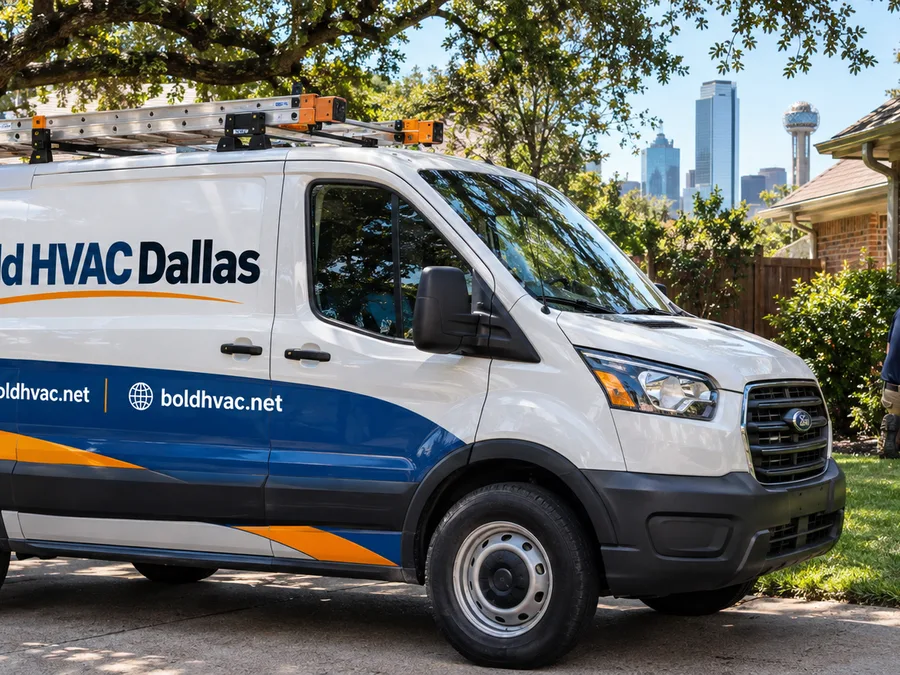
Check AvailabilityDallas HVAC access and equipment layouts vary by property. Downtown high-rises may have building access rules, shared mechanical areas, loading restrictions, or management approval requirements. Provide parking and access instructions early so the technician can arrive with a workable plan.
Older homes in areas such as Oak Cliff and East Dallas may contain equipment installed in tight closets, crawl spaces, or attics. Those conditions affect safe access and repair time. In neighborhoods with larger detached homes, including parts of North Dallas, a property may have multiple systems or zoned controls, so identifying which thermostat and air handler serve the affected rooms helps narrow the diagnosis.
Attic equipment presents an added concern during hot weather because the work area can become much hotter than the occupied rooms. Keep attic access unobstructed and do not enter a dangerously hot attic to investigate. For commercial properties, share roof-access requirements, alarm procedures, and the location of electrical disconnects before arrival.
Check the thermostat mode and setpoint, then replace the thermostat batteries if the model uses them. Look at the HVAC breaker once. If it has tripped, do not keep resetting it; repeated trips can indicate an electrical or mechanical fault. Confirm that the return-air grille is not blocked and inspect the filter without opening equipment cabinets.
If water is leaking, turn off cooling at the thermostat and protect nearby flooring if you can do so safely. If the evaporator coil or insulated refrigerant line is covered in ice, switch cooling off. Running the fan can help thaw the coil, but restoration may take several hours. Do not pour hot water on the equipment.
For a natural gas odor, leave the property, avoid switches or flames, and contact Atmos Energy's emergency service or emergency responders from a safe location. For a carbon monoxide alarm, move everyone into fresh air and contact emergency services. HVAC repair should begin only after the immediate hazard has been addressed.
Do not open a sealed refrigerant circuit or handle refrigerant. The U.S. Environmental Protection Agency requires technicians who service equipment that can release regulated refrigerants to hold the appropriate Section 608 certification.
Tell Bold HVAC Dallas what the system is doing, when the problem started, and whether you have noticed water, odors, smoke, ice, or electrical issues so the emergency visit can be prepared properly.
Call to ScheduleYes, emergency service can cover central air conditioners, furnaces, heat pumps, air handlers, packaged units, and many ductless systems. The exact repair depends on the equipment model, safe access, diagnosis, and part availability. Provide the brand and model number when it is easy to read without removing a cabinet.
Arrival time depends on current demand, technician location, traffic, weather, and the type of equipment involved. Severe Dallas heat can increase service volume, while Downtown access or building procedures can add time. You should receive the current availability rather than a guaranteed time that conditions may not support.
Many common failures can be repaired during the initial visit when diagnosis confirms the problem and the correct part is available. Proprietary control boards, variable-speed motors, compressors, and some communicating-system components may require a follow-up. The technician should explain whether the system can remain off safely until the part arrives.
Turn it off if the sound is new, severe, or accompanied by burning odor, smoke, vibration, poor airflow, or breaker trips. Grinding can indicate a motor or bearing problem, while rapid electrical buzzing can point to a contactor or power issue. Continuing to run damaged equipment may worsen the failure.
A frozen system needs diagnosis if normal airflow is not restored after the ice fully thaws and a clean filter is installed. Common causes include restricted airflow, a dirty coil, blower trouble, or low refrigerant charge. Dallas cooling systems often run for long periods during hot weather, so operating a frozen unit can put added strain on the compressor.
Replacement deserves consideration when a major component has failed and the equipment also has age, condition, refrigerant, efficiency, or repeated-repair concerns. An emergency visit should still identify the immediate fault and provide a repair option when one is safe and reasonable. Compare the written repair scope with replacement cost, warranty coverage, and expected parts availability.
Provide the property type, equipment type, thermostat symptoms, visible model information, access instructions, and any safety concerns. For a Downtown Dallas building, include parking, loading, elevator, roof, or management requirements. For attic equipment, make sure the access opening and path are clear.
Describe the heating or cooling failure and any safety warning signs. Bold HVAC Dallas will discuss current availability and the next practical step for diagnosis.