Repair Options
A diagnostic visit should identify the failed component and likely cause. Ask whether the quote covers parts, labor, refrigerant if required, and testing after the repair.
Serving Dallas, Texas & surrounding areas
24/7 Emergency Response
Compare practical ways to save on repairs, maintenance, installation, and system upgrades without trading dependable comfort for a low upfront price.

The best HVAC deals in Dallas combine a fair price with equipment and work that fit the home. A cheap repair that overlooks the underlying fault, or an oversized replacement system that short cycles, can cost more over time. The useful comparison is the complete scope: diagnosis, parts, labor, equipment specifications, warranty terms, permit responsibility when applicable, and the work needed to commission the system.
Bold HVAC Dallas helps homeowners compare those details before making a decision. Our HVAC service specialists across the Dallas area look at the existing equipment, comfort concerns, duct conditions, controls, and the home's cooling and heating needs. That gives you a practical basis for deciding whether repair, maintenance, or replacement offers better value.
Dallas cooling systems work through long periods of hot weather, and high outdoor temperatures make capacity, airflow, and condenser condition especially important. Heating still matters when cold fronts arrive. A worthwhile deal should support dependable performance in both seasons rather than focus on one promotional price.
A diagnostic visit should identify the failed component and likely cause. Ask whether the quote covers parts, labor, refrigerant if required, and testing after the repair.
Planned service can catch dirty coils, weak capacitors, clogged drains, poor electrical connections, and airflow restrictions before peak-weather operation puts more stress on the system.
Compare matched indoor and outdoor equipment, efficiency ratings, installation work, thermostat compatibility, warranty terms, and commissioning rather than comparing model prices alone.
Variable-speed blowers, inverter-driven equipment, zoning, and compatible controls may improve comfort in suitable homes. The value depends on layout, ductwork, usage, and budget.
Manufacturer promotions, federal tax provisions, and utility programs can change. Eligibility may depend on the exact model, efficiency rating, installation date, and program rules.
Equipment age is only one factor. Repair history, refrigerant type, present condition, comfort problems, and the cost of the proposed repair should also guide the decision.
Start with written, comparable scopes. Each replacement proposal should identify the outdoor unit, indoor coil or air handler, furnace when included, efficiency rating, labor, controls, disposal, and warranty coverage. Ask whether duct transitions, drain work, electrical changes, equipment pads, permits, and startup testing are included or priced separately.
Equipment sizing deserves close attention. A contractor should use a load calculation, commonly called Manual J, rather than relying only on the old unit's capacity or the home's square footage. Manual S is used to select equipment for the calculated load, while Manual D addresses duct design. Oversized equipment may satisfy the thermostat quickly but can cycle too often and control humidity poorly.
For repairs, compare the diagnosis as well as the total. A proposal should distinguish a failed capacitor, contactor, blower motor, control board, compressor issue, airflow restriction, or refrigerant leak. If refrigerant is involved, ask whether leak detection and the amount added are included. Those details reveal whether two estimates actually cover the same work.
Dallas homes vary enough that the same equipment package is not right for every property. Historic homes in Swiss Avenue may have older building assemblies, limited chases, or duct configurations that require careful planning. Lakewood includes established homes where additions and prior renovations can create uneven loads between rooms. Oak Cliff has a mix of older and updated housing, so electrical capacity, return-air paths, and existing ductwork need to be checked rather than assumed.
Newer homes in Far North Dallas may have tighter construction and modern controls, but room exposure, insulation, duct leakage, and equipment matching still affect comfort. In Uptown, condominiums and townhomes can present access, equipment-clearance, and property-management requirements that change labor and scheduling.
Oncor delivers electricity across much of the Dallas area, while retail electricity plans vary because Texas has a competitive retail market. Any efficiency comparison should use the homeowner's actual electricity rate and operating habits. Rebates or incentive programs should be verified at the time of purchase because availability, qualifying equipment, and documentation rules can change.
We begin with symptoms such as uneven temperatures, weak airflow, unusual cycling, rising operating concerns, noise, or a system that has stopped heating or cooling.
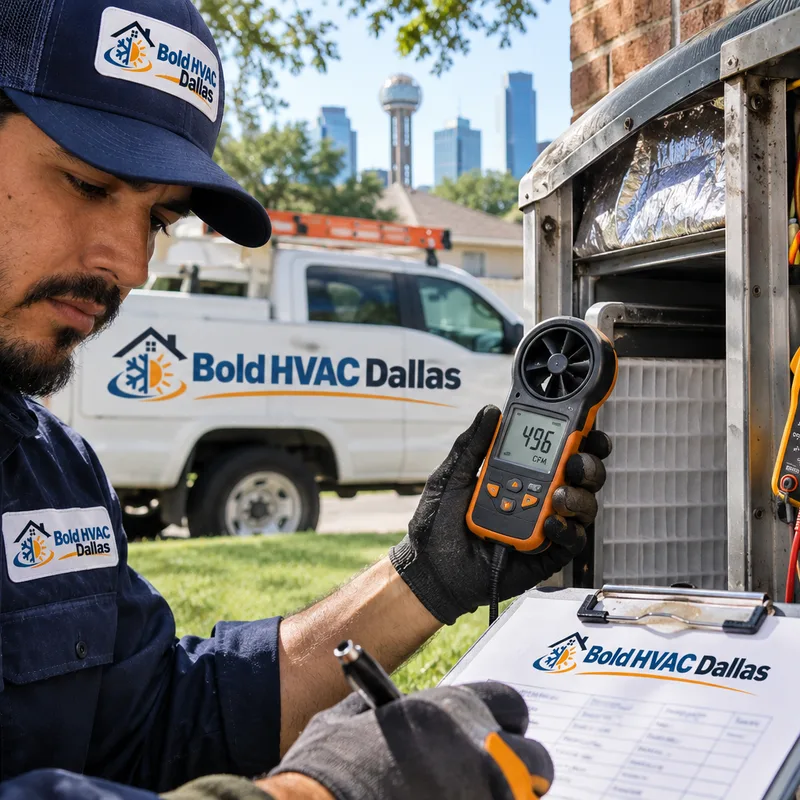
The evaluation may include electrical measurements, temperature split, airflow indicators, filter and coil condition, drain performance, refrigerant diagnostics when appropriate, and an inspection of accessible ductwork.
When more than one path makes sense, we explain repair, maintenance, and replacement options with the work included in each. Equipment recommendations account for load, compatibility, and installation requirements.
Applicable manufacturer offers, financing terms, tax provisions, or utility incentives should be checked against the exact equipment and current rules before they are treated as part of the deal.
After approval, the work is completed and tested. Replacement commissioning should confirm operation, airflow, temperature performance, controls, drainage, and the manufacturer's required startup values.
A large discount means little when the underlying price or scope is unclear. Be cautious when an offer omits model numbers, matched-system information, labor coverage, expiration terms, or the conditions required to qualify. Financing promotions also deserve a full review of the term, interest structure, fees, and what happens after any promotional period.
Replacement quotes based only on square footage are another warning sign. Window area, orientation, insulation, air leakage, ceiling height, occupancy, and internal heat gains affect the load. The duct system must also move the required air without excessive static pressure.
For repair specials, ask what the diagnostic fee covers and whether it is applied to approved work. Written exclusions matter. A dependable estimate should tell you what will be repaired, what remains outside the scope, how long the quoted price is valid, and which warranties apply.

Bring us your comfort concerns or an existing estimate, and we will help you compare the scope, equipment, and long-term value before work begins.
Call to ScheduleA good replacement deal should identify the matched indoor and outdoor equipment, efficiency rating, labor scope, controls, warranty terms, and required installation work. It should also state whether permits, disposal, duct transitions, drains, electrical updates, equipment supports, and commissioning are included. Dallas homes differ in layout and age, so a load calculation and inspection are more useful than a package based only on square footage.
No, a seasonal promotion is valuable only when the equipment and scope fit the home. Manufacturer offers may apply to selected model combinations, and financing promotions may have specific credit, term, or fee conditions. Compare the final installed amount and written scope, then confirm the offer's expiration date and eligibility rules.
Repair is often reasonable when the system is otherwise sound, the fault is isolated, and the cost is proportionate to its condition. Replacement becomes more compelling when breakdowns repeat, major components are failing, comfort remains poor, or the existing equipment is difficult to support. The diagnosis, repair history, refrigerant type, energy use, and condition of the indoor and outdoor units should all be considered.
No, rebates and tax provisions usually apply only to qualifying equipment and completed installations that meet current rules. Model numbers, efficiency ratings, installation dates, customer eligibility, and required documents can affect approval. Oncor, manufacturers, and federal authorities may administer separate programs, so each incentive should be verified before purchase.
A straightforward residential changeout is often completed within a working day, while duct changes, electrical work, access limits, permits, or multiple systems can extend the schedule. Condominiums and townhomes in Uptown may also require property-management coordination. The expected timeline should be confirmed after the equipment and installation conditions are inspected.
No, efficiency ratings do not account for sizing, installation quality, duct performance, controls, warranty coverage, or the total scope. Compare SEER2 for cooling efficiency and AFUE for furnace efficiency where applicable, but also confirm that the equipment is a matched system and that startup testing is included. Proper airflow and commissioning affect how the installed system performs.
Provide the equipment model numbers if accessible, approximate installation age, repair history, recent utility concerns, comfort problems, and any planned home changes. Photos of accessible equipment and thermostat information can help with early planning, but an on-site inspection is usually needed to confirm the scope. Details about room additions or persistent hot and cold areas are especially useful.
Tell Bold HVAC Dallas what your system is doing and what matters most to you. We will assess the equipment, explain practical options, and provide a clear scope for the work.