Airflow Restrictions
A loaded filter, blocked coil, weak blower, closed register, or damaged accessible duct connection can reduce airflow and contribute to poor comfort or coil icing.
Serving Dallas, Texas & surrounding areas
24/7 Emergency Response
Get a clear assessment of your heating and cooling equipment, practical findings, and a sensible plan for addressing problems before peak weather puts the system under greater strain.
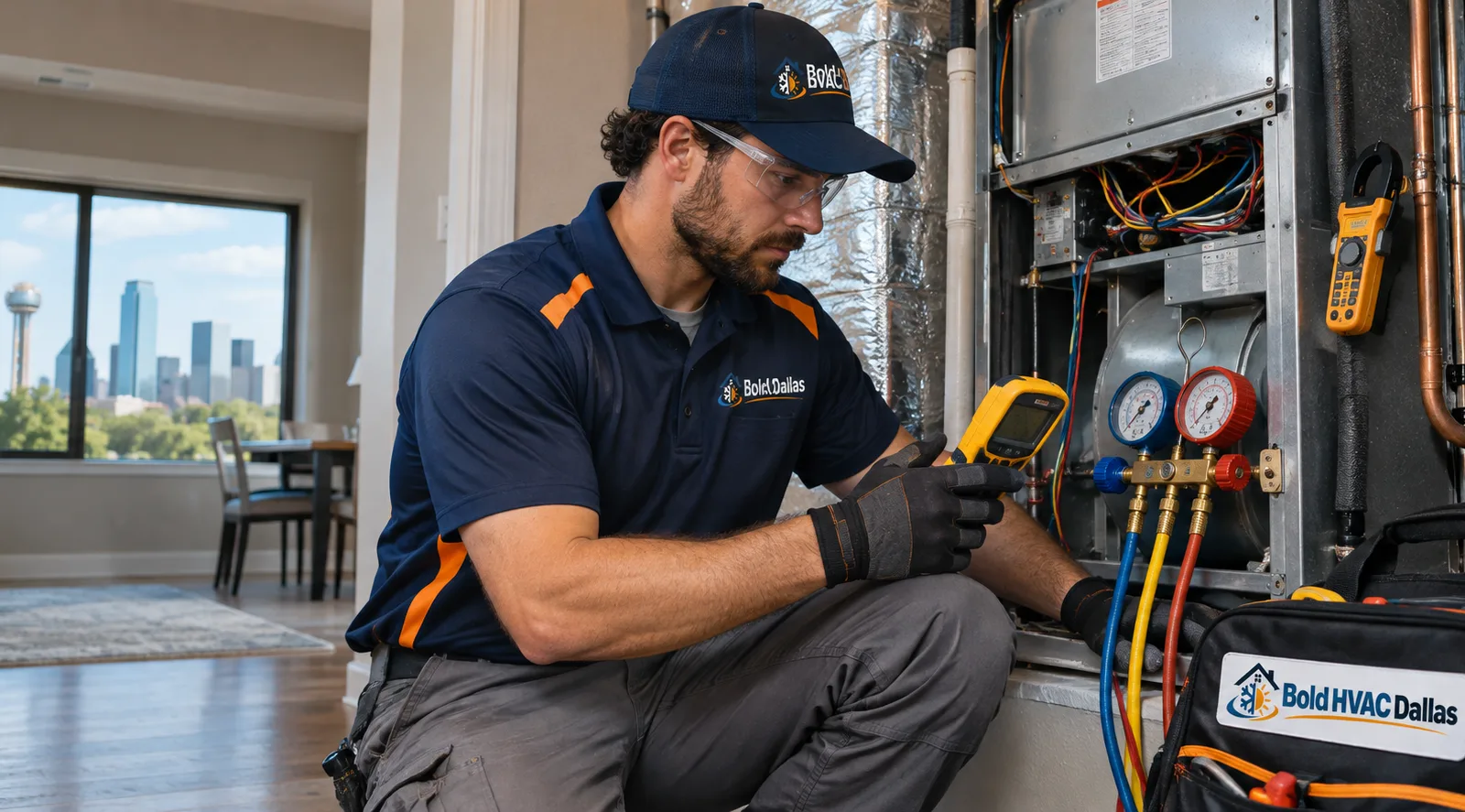
An HVAC inspection Dallas property owners can rely on should explain the condition of the system, identify visible or measurable faults, and separate urgent concerns from routine maintenance. Bold HVAC Dallas inspects accessible heating and cooling components, tests operation, and discusses the findings in plain language.
Dallas cooling systems work through long periods of hot weather, when weak capacitors, dirty coils, restricted airflow, and worn electrical parts can become more apparent. Heating equipment also needs attention before cold weather. Our HVAC service crew across Dallas performs inspections for homeowners, property buyers, landlords, and businesses that want useful information before deciding what comes next.
An inspection is appropriate when a system has trouble keeping up, cycles frequently, makes unfamiliar noises, produces uneven temperatures, or has caused an unexplained increase in energy use. It is also a sensible step before buying a property or after equipment has sat unused. An inspection is diagnostic work. It does not automatically include repairs, cleaning, or code upgrades, although the findings may support recommendations for that work.
The inspection begins with the thermostat and operating controls, followed by a visual and functional assessment of accessible equipment. For a split system, that generally includes the outdoor condensing unit, indoor evaporator section, blower assembly, filter area, electrical connections, condensate drainage, and accessible duct connections. Heat pumps are checked in available operating modes. Furnaces receive a review of accessible combustion and venting components when conditions permit safe operation.
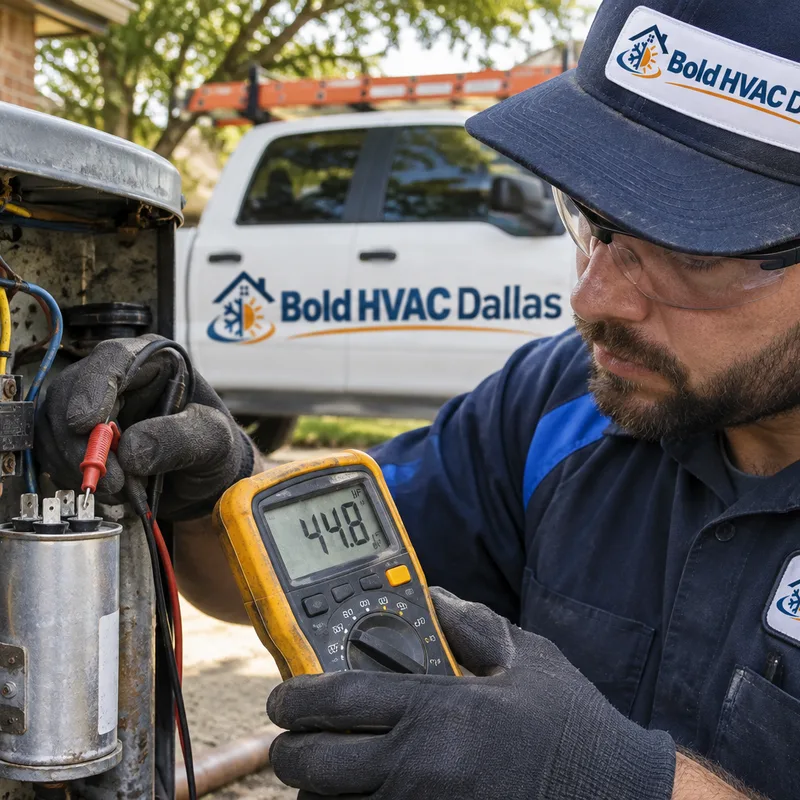
Diagnostic checks may include temperature split, supply and return air readings, capacitor testing, motor amperage, contactor condition, refrigerant-line observations, and a look for oil residue or other signs associated with a possible refrigerant leak. Refrigerant pressure is tested when symptoms and operating conditions make that measurement useful. Inspectors also look for coil blockage, damaged insulation, loose wiring, corrosion, unusual vibration, and water around the drain pan or condensate line.
Some conditions cannot be confirmed during a standard inspection. Concealed ductwork, intermittent faults, internal heat-exchanger defects, and refrigerant leaks may require additional testing or access. When that is the case, the findings should state the limitation rather than present an assumption as a diagnosis.
A loaded filter, blocked coil, weak blower, closed register, or damaged accessible duct connection can reduce airflow and contribute to poor comfort or coil icing.
Pitted contactors, swollen capacitors, overheated conductors, loose terminals, and abnormal motor readings can point to developing reliability problems.
Temperature readings and operating behavior can reveal low capacity, short cycling, possible refrigerant concerns, or heat-transfer problems at the coils.
A restricted condensate line, damaged pan, missing insulation, or poor drainage can allow water to collect around indoor equipment.
Accessible furnace venting, burner behavior, ignition, safety controls, and signs of heat damage are reviewed when the unit can be operated safely.
Model information, visible deterioration, noise, vibration, installation concerns, and current operation help establish the system's overall condition.
We start with symptoms, comfort concerns, equipment history, or the purpose of the assessment. A buyer's evaluation may have different priorities than troubleshooting a system that stops during afternoon heat.
The technician examines indoor and outdoor equipment, filters, controls, wiring, drain components, accessible refrigerant lines, and visible duct connections. Safe access and current operating conditions determine what can be checked.
The system is run through appropriate modes. The technician may record temperatures, electrical measurements, airflow indicators, and equipment behavior to support the diagnosis.
You receive a practical explanation of observed conditions. Safety concerns and active failures come first, followed by reliability items, maintenance needs, and optional improvements.
If work is recommended, the scope should identify what needs attention and why. You can then decide whether to repair, monitor, maintain, or seek further testing.
North Texas heat places sustained demand on air conditioners, while spring pollen, windblown debris, and cottonwood fluff can collect on outdoor coils and reduce heat transfer. Attic-installed equipment and ducts also operate in a much hotter space during summer. An inspector should consider these conditions when evaluating airflow, insulation, drainage, and cooling performance.
Dallas properties vary widely. Older homes in areas such as Lakewood may have equipment or ductwork added long after the original construction, which makes access, sizing, and distribution worth reviewing. Oak Cliff includes homes from several construction periods, so an inspection may uncover a mix of older ducts and newer replacement equipment. In newer subdivisions around the metro area, the focus may shift toward installation details, zoning controls, condensate routing, and whether all rooms receive adequate airflow.
Commercial inspections require attention to operating schedules, rooftop access, multiple thermostats, packaged equipment, and tenant comfort complaints. Regardless of property type, outside temperature affects which tests are meaningful. Cooling performance cannot always be fully evaluated during cold weather, and some heating checks are limited when conditions do not permit normal operation.

A useful inspection separates facts from possibilities. If a capacitor tests outside its rated tolerance, that is a measured finding. If oil residue suggests a possible refrigerant leak, leak detection may still be required to confirm the source. If one room is uncomfortable, the cause may involve duct design, insulation, solar exposure, or equipment capacity, so replacing a component without diagnosis may not solve it.
Bold HVAC Dallas explains what was observed, what was tested, and any access or weather limitations. Recommendations are organized by urgency rather than presented as one undifferentiated list. Active electrical damage, unsafe furnace operation, or water threatening the property deserves prompt attention. Normal wear or an efficiency opportunity may allow time for planning.
An HVAC inspection also differs from a general home inspection. A home inspector usually provides a broad review of many property systems. An HVAC technician can take trade-specific measurements and investigate heating or cooling symptoms in greater depth. For a real estate purchase, the two assessments can complement each other, especially when the general report flags age, poor temperature response, corrosion, or unusual noise.
A standard HVAC inspection in Dallas typically costs about $90 to $200 for one residential system. A more detailed diagnostic visit, multiple systems, commercial equipment, difficult access, or specialized testing may cost $200 to $500 or more.
Final pricing depends on the number and type of units, the reason for the inspection, equipment location, operating condition, and whether tests such as combustion analysis or refrigerant leak detection are needed. Repairs, cleaning, and replacement parts are separate unless included in a written scope. The exact cost is confirmed before the inspection begins.
If your system is struggling, making unfamiliar sounds, or due for an independent condition check, arrange an inspection before heavy heating or cooling demand makes the problem harder to manage.
Call to ScheduleA residential inspection commonly takes about 60 to 90 minutes for one accessible system. Multiple units, intermittent symptoms, attic access, rooftop equipment, or additional electrical and refrigerant diagnostics can extend the visit.
Yes, a trade-specific HVAC inspection is sensible when the home's general inspection raises concerns or the equipment's condition is uncertain. Older Dallas homes may contain replacement equipment connected to earlier ductwork, so age labels alone do not show how the complete system performs.
An inspection can find symptoms of a possible leak, but confirming its location may require separate leak detection. Low operating pressure, oil residue, icing, or poor cooling can justify electronic detection, soap-bubble testing, or another method appropriate to the system and refrigerant.
Yes, accessible heating and cooling components can be assessed, but outdoor conditions may limit performance testing. A Dallas air conditioner cannot always receive a meaningful full-load cooling test during cold weather, just as some heating symptoms may not appear on a warm day.
No, an inspection focuses on condition, operation, measurements, and diagnosis, while a tune-up may include cleaning, adjustments, and maintenance tasks. The scope should state whether coil cleaning, drain clearing, filter replacement, or other hands-on maintenance is included.
No, equipment age by itself does not require replacement. The decision should consider current operation, safety, repair history, comfort, efficiency, refrigerant type, part availability, and the cost of any confirmed repairs.
Commercial and rooftop equipment can be inspected when safe access and authorization are available. Dallas commercial properties may have packaged rooftop units, split systems, or multiple zones, so pricing and visit length depend on the equipment count and requested scope.
Clear reasonable access to thermostats, indoor equipment, electrical panels, and outdoor units, and note when the symptoms occur. Do not remove equipment panels or enter an unsafe attic; the technician will determine which areas can be accessed safely.
Tell Bold HVAC Dallas what the system is doing and why you need it assessed. We will outline the inspection scope, review access needs, and help you plan the next step based on documented findings.