More Consistent Airflow
A dirty filter, loaded blower wheel, obstructed return, or coil buildup can reduce airflow. Maintenance identifies these restrictions and separates routine cleaning needs from duct or equipment problems.
Serving Dallas, Texas & surrounding areas
24/7 Emergency Response
Seasonal service helps your heating and cooling equipment run efficiently, maintain steady comfort, and reveal developing problems before peak weather puts the system under heavy demand.

Professional HVAC maintenance Dallas, TX homeowners schedule should account for long cooling cycles, hot outdoor conditions, airborne debris, and the quick temperature changes that can occur during North Texas shoulder seasons. These conditions place sustained demand on air conditioners and heat pumps. A thorough visit checks the equipment under operating conditions rather than relying on a quick visual inspection.
Bold HVAC Dallas provides planned service for central air conditioners, furnaces, heat pumps, and common split-system configurations. During each maintenance visit, our HVAC service experts around Dallas, TX inspect the system, clean accessible components, test its operation, and explain findings in practical terms. The goal is to keep sound equipment working properly and identify worn or unsafe parts before they contribute to a breakdown.
Maintenance is especially useful before the first extended stretch of hot weather. An air conditioner may start and cool during a mild afternoon yet struggle once outdoor temperatures rise and the system runs for hours. Testing temperature change, electrical components, drainage, airflow, and refrigerant-circuit operation gives a clearer view of its condition.
A maintenance visit begins with the thermostat and operating sequence. The technician confirms that the system responds correctly, observes startup and shutdown, and checks for unusual sound or vibration. At the indoor equipment, service commonly includes inspecting the filter, blower assembly, evaporator coil condition, condensate pan, drain line, accessible wiring, and safety controls.
At the outdoor unit, the technician checks the condenser coil, fan motor, contactor, capacitor, disconnect, wiring, and cabinet condition. Electrical measurements may include supply voltage, motor amperage, and capacitor values compared with the component rating. Refrigerant pressures or temperatures are evaluated when system condition and manufacturer procedures call for them. Refrigerant should not be added simply because maintenance is being performed; a sealed system does not consume refrigerant during normal operation.
For gas heating equipment, seasonal service includes examining the burner area, ignition sequence, flame-sensing components, venting, and accessible heat-exchanger surfaces. Heat pumps require both cooling and heating checks, including reversing-valve operation and defrost controls when conditions permit. Findings depend on equipment type, access, and system condition.
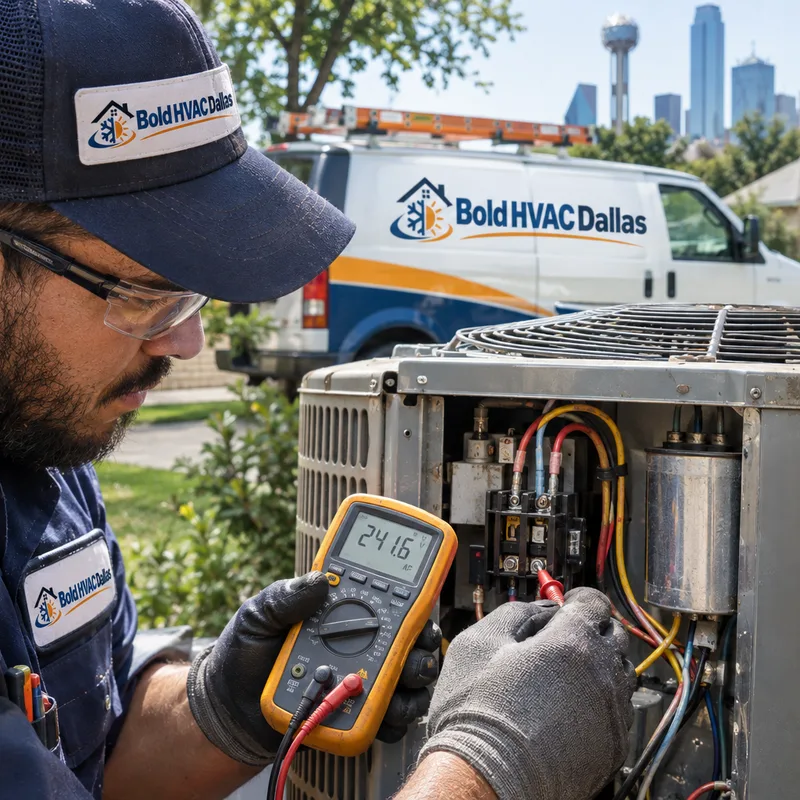
A dirty filter, loaded blower wheel, obstructed return, or coil buildup can reduce airflow. Maintenance identifies these restrictions and separates routine cleaning needs from duct or equipment problems.
Loose electrical connections, weakening capacitors, clogged drains, and worn contactors can develop before the system stops working. Inspection gives you an opportunity to address confirmed faults.
Dallas cooling systems remove indoor moisture as air passes across the cold evaporator coil. Correct airflow, coil condition, and condensate drainage support that process.
Documented measurements and observations make it easier to track recurring concerns, compare changes between visits, and make informed repair or replacement decisions.
Heating checks cover ignition, venting, safety controls, and visible equipment condition. Any concern that requires repair should be explained before additional work begins.
Many equipment warranties require proper installation and maintenance. Keep service records and follow the written terms supplied by the manufacturer.
The visit starts with your observations, including uneven temperatures, long run times, drainage concerns, unusual noises, recent thermostat changes, and prior repairs.
The technician checks accessible indoor and outdoor components, cleans serviceable areas included in the visit, and records relevant operating and electrical measurements.
After maintenance, the system is operated through an appropriate cycle. The technician reviews thermostat response, temperature change, airflow indicators, drainage, and startup behavior.
You receive a plain explanation of the system's current condition. Immediate faults are distinguished from items that can be monitored, and any recommended repair is discussed separately.
Cooling maintenance is best completed before sustained summer demand, while heating equipment should be checked before regular cold-weather operation. Many households choose two visits each year because cooling and heating modes use different components and safety sequences. A heat pump also benefits from seasonal checks even though the same outdoor unit operates throughout the year.
Filter replacement follows the filter manufacturer's guidance and actual conditions in the home rather than one universal schedule. Filter size, media type, pets, renovation dust, fan runtime, and indoor air conditions all affect loading. A high-restriction filter is not automatically better; it must be compatible with the system's available static pressure and airflow requirements.
Local property conditions can also change the work. Older homes in established areas such as Oak Cliff and Lakewood may have equipment retrofitted into tighter closets, attics, or crawl spaces. Townhomes and condominiums in Uptown can have access restrictions or shared-property rules. Newer homes in North Dallas may use zoned controls or multiple systems. Access and configuration should be discussed when scheduling so adequate time can be allowed.

A standard residential HVAC tune-up in Dallas typically costs about $90 to $200 per system, while multi-system service or maintenance that requires added cleaning and diagnostic time may cost more. Membership plans can use different pricing and visit schedules.
Final cost depends on equipment type, the number of systems, attic or rooftop access, coil condition, drain blockages, and whether troubleshooting is needed beyond routine service. Repairs, replacement parts, and refrigerant work should be priced separately. The exact cost and included scope are confirmed for the service visit.
Maintenance is intended for equipment that is operating or can be placed into a normal test cycle. It is the right choice when you want seasonal inspection, cleaning, operating measurements, and a condition report. It can also help investigate mild concerns such as longer run times or a newly noticed sound, although findings may lead to a separate diagnostic or repair recommendation.
Choose diagnostic service when the system will not start, repeatedly trips a breaker, produces a burning odor, leaks a significant amount of water, or cannot maintain temperature. Turn the equipment off if continued operation appears unsafe or could cause property damage. Ice on refrigerant lines or the indoor coil also calls for investigation because low airflow, control problems, or a refrigerant-circuit fault may be involved.
Dallas HVAC maintenance cannot reverse mechanical wear, repair a failed component, or correct undersized equipment. It can establish current operating condition and help you decide what deserves attention. Bold HVAC Dallas explains those limits clearly, so routine work does not become an open-ended repair without your approval.
Schedule seasonal service before heavy cooling or heating demand, and get a clear account of your system's condition, maintenance completed, and any items that deserve attention.
Call to ScheduleTwice-yearly maintenance is a practical schedule for systems that provide both cooling and heating, with one visit focused on cooling operation and another on heating operation. Dallas air conditioners can face long summer run times, while furnaces and heat pumps have separate ignition, defrost, or safety components that need appropriate seasonal checks. Equipment age, manufacturer instructions, and operating conditions may justify a different plan.
A routine visit commonly takes about one to two hours per system, although access and condition can extend the appointment. Attic equipment, multiple zones, heavily loaded coils, blocked condensate drains, and symptoms that require diagnostic work all add time. The technician needs enough time to operate the equipment before and after service rather than complete only a visual check.
Schedule diagnostic service rather than a basic tune-up if the air conditioner does not run, trips electrical protection, freezes, or fails to cool. Routine maintenance may reveal minor developing concerns, but an active failure requires focused testing and may require parts or refrigerant-circuit work. Describe the symptoms when arranging service so the correct appointment type can be planned.
Routine maintenance does not normally include adding refrigerant, and a functioning sealed system should not need seasonal refills. A technician may evaluate refrigerant-circuit performance when readings and operating conditions support accurate testing. If a low charge is suspected, leak evaluation and any refrigerant work should be discussed and priced separately under applicable handling requirements.
Maintenance can correct certain efficiency problems, such as dirty accessible coils, airflow restrictions, incorrect controls, or components operating outside their ratings, but it cannot promise a specific bill reduction. Dallas electricity use also changes with outdoor temperature, thermostat settings, insulation, duct leakage, occupancy, and utility rates. Comparing operating measurements and system condition is more useful than assuming one cause.
Provide clear access to the thermostat, indoor equipment, electrical panel, filter location, and outdoor unit. Move stored items away from attic entries or equipment closets, secure pets, and share any gate or condominium access requirements. Keep notes about unusual sounds, odors, water, room-to-room temperature differences, and when each symptom occurs.
Maintenance records may help satisfy warranty terms, but the written manufacturer warranty determines the actual requirements. Keep invoices and service documentation, use compatible parts and filters, and follow the maintenance schedule stated for your equipment. Labor, refrigerant, diagnostic work, and access costs may be excluded even when a covered part is approved.
Tell Bold HVAC Dallas about your equipment, access, and any comfort concerns. We will help arrange the right maintenance visit and explain what the service will cover before work begins.