Accurate system sizing
A Manual J load calculation considers construction, insulation, windows, orientation, air leakage, and other factors that affect the home's cooling demand.
Serving Dallas, Texas & surrounding areas
24/7 Emergency Response
Get a properly sized cooling system, a clear installation scope, and dependable comfort built for long stretches of Texas heat.

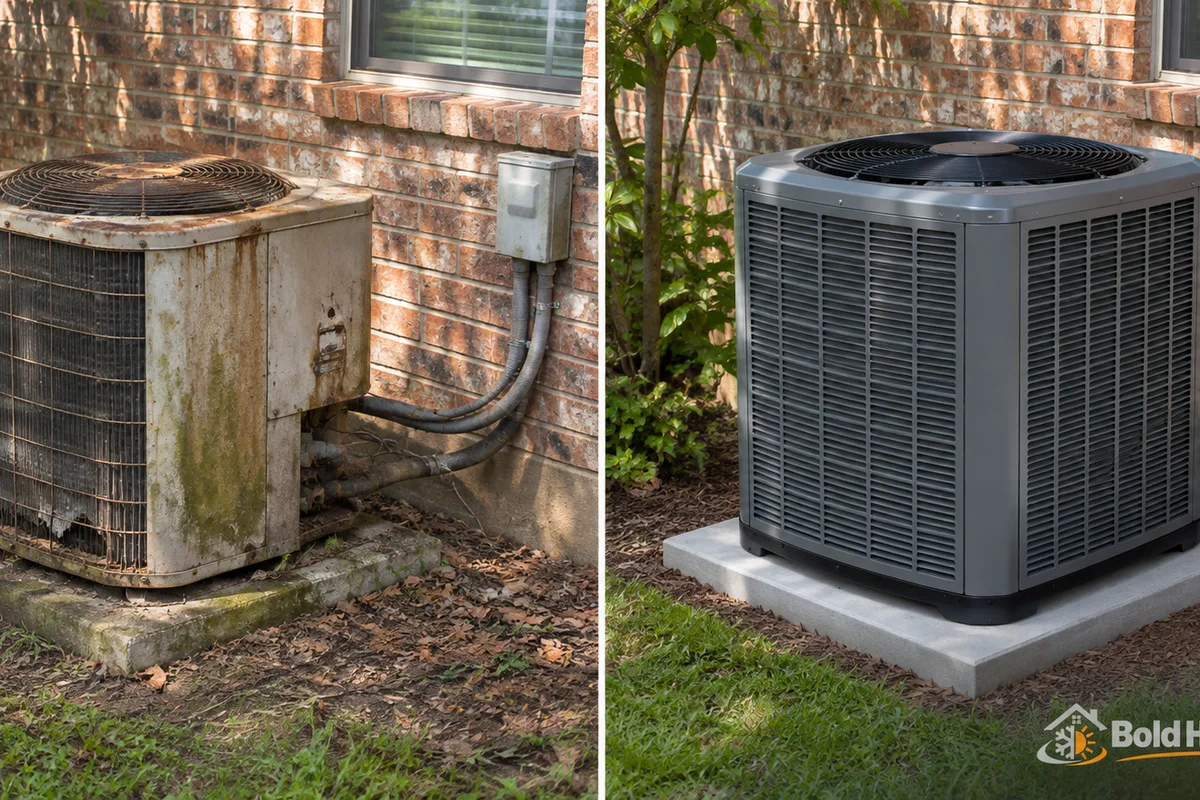
An AC replacement in Dallas, TX should start with an assessment, not a quick recommendation based only on the old unit's capacity. Bold HVAC Dallas evaluates the home's cooling load, existing ductwork, electrical requirements, indoor equipment, refrigerant lines, drainage, and thermostat before recommending a system.
Our HVAC service specialists in Dallas, TX explain which components need replacement, whether any existing parts can remain, and how each option fits the property. The goal is a matched system that can control temperature and indoor humidity without relying on an oversized unit that cycles on and off too quickly.
Dallas summers place sustained demand on cooling equipment. Attic heat, insulation levels, window exposure, air leakage, ceiling height, and duct location can all affect the required capacity. Those conditions are why equipment selection should be based on the home rather than a simple tons-per-square-foot shortcut.
Replacement may be the practical choice when an aging system has a failed compressor, leaking evaporator coil, repeated electrical problems, or repair costs that are difficult to justify. Uneven cooling, long run times, rising energy use, excessive noise, and poor humidity control can also point to declining performance, although each symptom should be diagnosed before equipment is condemned.
Refrigerant type matters as well. Older systems may use R-22, which is no longer produced or imported in the United States. A major refrigerant-side repair on one of these systems can make replacement worth comparing. New equipment selection should account for current refrigerant standards and the availability of compatible indoor and outdoor components.
A useful recommendation compares the cost and likely service life of a repair with the installed cost, warranty terms, and operating characteristics of replacement options. Bold HVAC Dallas provides that context so the decision is based on the condition of the whole system.
A Manual J load calculation considers construction, insulation, windows, orientation, air leakage, and other factors that affect the home's cooling demand.
The outdoor condenser, indoor evaporator coil, and air handler or furnace must be compatible. A matched system supports rated performance and proper refrigerant operation.
Restricted returns, undersized ducts, leaks, and closed registers can reduce comfort even after new equipment is installed. Static pressure and delivered airflow deserve attention.
The installation may require a suitable disconnect, overcurrent protection, condensate drain work, a float switch, and confirmation that the circuit meets equipment requirements.
SEER2 ratings allow comparisons under updated test procedures. The best choice balances installed price, expected use, comfort needs, and compatibility with the property.
Startup should include airflow checks, refrigerant charging according to manufacturer procedures, temperature measurements, thermostat setup, and confirmation of safe operation.
AC replacement in Dallas typically costs about $7,000 to $15,000 for a standard residential system, while larger, higher-efficiency, variable-capacity, or duct-modification projects may exceed that range. Equipment capacity, efficiency rating, compressor type, indoor-unit requirements, refrigerant-line condition, electrical work, access, and installation complexity change the final price.
A written estimate should identify the model pairing, labor, removal, permits when required, warranty terms, and any duct or drain work. The exact cost is confirmed after an on-site system assessment.
We examine the outdoor and indoor equipment, thermostat, electrical connections, refrigerant lines, condensate drainage, filter setup, accessible ductwork, and available installation space.
Cooling-load factors and airflow conditions guide equipment sizing. We also discuss temperature concerns, noise preferences, efficiency goals, and any rooms that have been difficult to cool.
You receive equipment choices with the proposed scope, compatibility details, and pricing. Differences such as single-stage, two-stage, and variable-capacity operation are explained in practical terms.
The old equipment is disconnected and removed. The replacement components are set, connected, sealed, drained, wired, and prepared according to the approved scope and manufacturer instructions.
We test system operation, verify key setup values, configure the thermostat, and explain filter care, normal operation, and applicable equipment registration or warranty steps.
Housing type and installation access can change the replacement plan. In Lakewood, established homes may have additions or older duct layouts that need closer airflow review. Oak Cliff includes homes with varied ages and construction styles, so the existing return-air path and electrical setup should be checked rather than assumed. In Uptown, condominiums and townhomes can present tighter equipment access, shared-building rules, and limited placement options.
Preston Hollow includes larger homes where zoning, multiple systems, and long duct runs may affect equipment selection. Downtown Dallas properties may involve managed access, equipment-location restrictions, and coordination with building personnel. These factors influence labor and scheduling as well as the type of equipment that fits.
Permitting and inspection requirements depend on the property and scope. Dallas residents are commonly served by Oncor's electric-delivery network, but the retail electric provider shown on the bill is separate. Available efficiency incentives can change, so current eligibility and equipment requirements should be verified before they influence a purchase decision.

Efficiency is one part of the decision. Single-stage systems operate at full output when cooling is needed. Two-stage equipment can run at a lower stage during lighter demand. Variable-capacity systems adjust output across a broader operating range and may provide steadier temperatures and better humidity management when they are correctly sized and installed.
Ask for the AHRI reference information for the proposed indoor and outdoor equipment pairing. This confirms that the combination has published performance data as a matched system. Also compare the manufacturer's parts warranty, available labor coverage, registration requirements, filter type, thermostat compatibility, sound levels, and maintenance expectations.
Heat-pump options may also be worth discussing when replacing both cooling and heating equipment. The right answer depends on the existing heat source, electrical capacity, comfort priorities, and full installed cost. Equipment quality matters, but sizing, airflow, refrigerant setup, and commissioning have a direct effect on how that equipment performs.
If your air conditioner is failing, get a written replacement scope that identifies the equipment, installation requirements, warranty terms, and final price before work begins.
Call to ScheduleA straightforward residential AC replacement can often be completed within one working day, although added duct, electrical, drain, access, or permit work may extend the schedule. Condominiums and managed properties in areas such as Uptown or Downtown Dallas can also require access coordination.
The indoor coil and outdoor condenser should usually be replaced as a verified matched combination. Mixing incompatible components can affect capacity, efficiency, refrigerant operation, and warranty coverage. A furnace may sometimes remain if it is compatible and in suitable condition, but the blower and cabinet fit must be evaluated.
The correct size should be determined with a cooling-load calculation rather than square footage alone. Dallas heat makes adequate capacity important, but oversized equipment can short-cycle and remove less indoor moisture. Insulation, windows, orientation, leakage, ceiling height, occupancy, and duct conditions all affect sizing.
New ductwork is needed only when the existing system cannot provide suitable airflow or has significant leakage, damage, contamination, or sizing problems. Static-pressure measurements and an inspection of accessible ducts can identify restrictions. Older Dallas homes with additions or altered layouts may need targeted duct changes rather than complete replacement.
Yes, AC systems can be replaced during Dallas hot weather, subject to equipment availability, safe working conditions, property access, and the scope of work. Scheduling early is wise when a system is showing serious failure signs because prolonged heat can increase demand for installation appointments.
A replacement estimate should identify equipment model numbers or clear specifications, capacity, efficiency rating, matched components, labor, removal, permit responsibilities, thermostat, drain and electrical work, warranty terms, and exclusions. It should also state whether refrigerant lines, the equipment pad, filters, and duct modifications are included.
Rebates or tax incentives may be available for qualifying equipment, but programs, eligibility rules, and funding change. Confirm the current requirements with the applicable utility or program administrator before selecting equipment, and verify whether the specific matched system qualifies.
Tell Bold HVAC Dallas what your system is doing and what you want to improve. We will assess the equipment, explain suitable options, and provide a clear scope for restoring dependable cooling.