HVAC contractors in Dallas, Texas

HVAC Contractors Dallas TX

Clear recommendations, written scopes, and skilled heating and cooling work for homes and commercial properties across the Dallas area.

✓Residential HVAC work ✓Commercial HVAC work ✓Written repair and replacement scopes
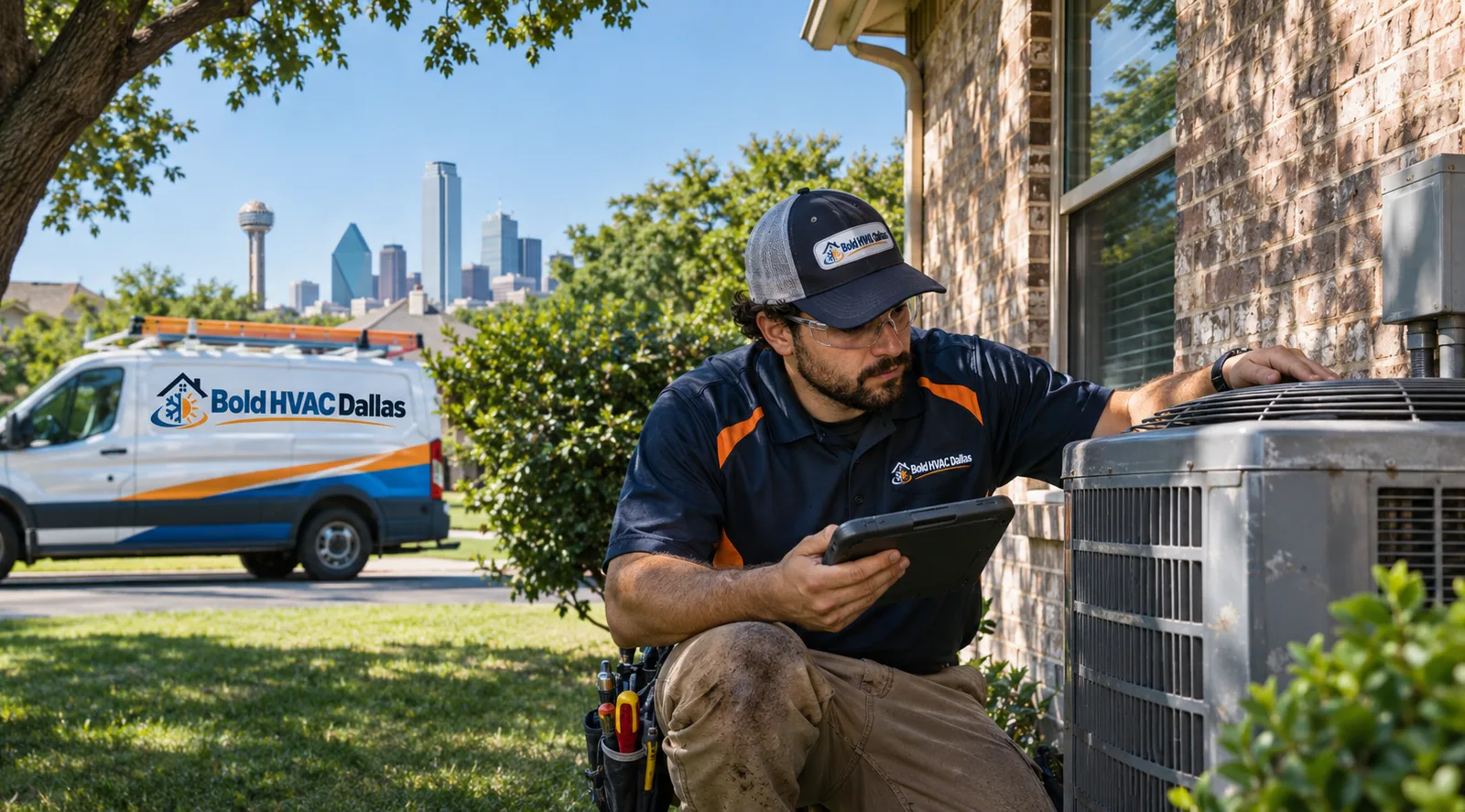
HVAC technician inspecting an outdoor air conditioning condenser at a Dallas home on a clear summer day

A Dallas HVAC Contractor for Repairs, Installation, and Maintenance

Property owners comparing HVAC contractors in Dallas, TX need more than a quick diagnosis. They need to know what failed, whether repair or replacement makes financial sense, what equipment fits the building, and what the work will include. Bold HVAC Dallas handles heating and cooling projects with a practical process built around those decisions.

Our team works on central air conditioners, heat pumps, furnaces, air handlers, thermostats, duct systems, and related indoor comfort equipment. When we arrive, our HVAC service specialists serving Dallas begin by examining the equipment, controls, airflow, and operating conditions before recommending work. That matters in North Texas, where prolonged summer heat places sustained demand on cooling systems and exposes problems such as dirty coils, weak capacitors, restricted airflow, and low refrigerant charge.

A useful estimate should identify the proposed equipment or repair, labor, required materials, warranty terms, and any work excluded from the price. We explain those details before work begins so the owner can compare options on equal terms.

Complete system support

Work Handled by HVAC Contractors in Dallas

Air Conditioning Repair

Diagnosis and repair may address failed capacitors, contactors, condenser fan motors, blower components, drain blockages, control faults, or refrigerant circuit problems. Testing should confirm the fault rather than relying on symptoms alone.

System Replacement

Replacement planning considers the building's cooling load, duct capacity, equipment efficiency, electrical requirements, and installation details. Matching indoor and outdoor components is necessary for rated operation.

Heating Service

Furnace and heat pump work includes controls, ignition components, burners, heat exchangers, reversing valves, defrost controls, auxiliary heat, and safety devices as applicable to the system.

Preventive Maintenance

A proper visit includes operating checks, electrical measurements, coil and filter inspection, condensate drainage, thermostat operation, and an airflow review. Findings should be documented clearly.

Airflow and Duct Problems

Hot rooms and long run times can result from undersized returns, closed dampers, damaged ducts, leakage, poor balancing, or blower issues. Airflow measurements help separate duct problems from equipment faults.

Commercial HVAC Work

Light commercial systems require attention to operating schedules, rooftop access, tenant comfort, controls, and disruption to business activity. The scope should state how access and shutdowns will be managed.

Compare the complete scope

Choosing Among Dallas HVAC Contractors

A reliable contractor should be willing to explain the diagnosis and show the readings or conditions behind it. Depending on the problem, that evidence may include temperature split, static pressure, electrical measurements, fault codes, refrigerant pressures, or visible equipment damage. One reading rarely tells the whole story, so results must be interpreted in the context of the complete system.

For replacement work, ask how the proposed capacity was selected. Manual J is the recognized residential load-calculation method, while Manual S is used to select equipment and Manual D addresses duct design. Square footage alone does not account for insulation, windows, orientation, air leakage, occupancy, or duct location.

Confirm who will obtain any required permit and arrange applicable inspections. Dallas construction work is subject to city requirements, and equipment installation must follow adopted codes and manufacturer instructions. Also ask for proof of appropriate licensing and insurance, model numbers, efficiency ratings, warranty terms, payment milestones, and a written description of duct, drain, electrical, or platform modifications.

The best HVAC contractor in Dallas is not automatically the one with the lowest initial price. Compare the actual scope, equipment match, installation method, warranty coverage, and exclusions before making a decision.
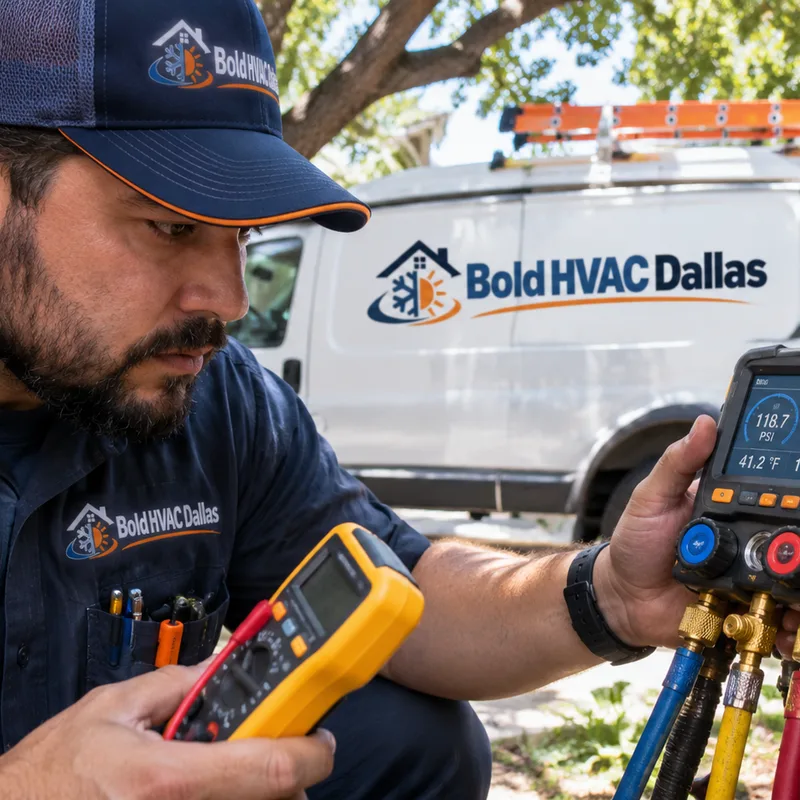
Qualified HVAC technician using digital gauges and electrical test instruments while diagnosing a residential cooling system
Measured diagnosis helps identify the cause of a comfort or equipment problem.
Local property conditions

HVAC Contractors Dallas TX Property Owners Can Evaluate Clearly

Dallas contains a wide mix of building types, and the mechanical approach should match the property. Older homes in Oak Cliff may have equipment retrofitted into structures that were built before central cooling, so return-air paths and duct access deserve close attention. Lakewood includes older houses where additions or renovations can create uneven loads between original and altered rooms. In Uptown, multifamily buildings and tighter equipment locations can make access, condensate management, and coordination with property management part of the job.

Preston Hollow properties may have larger floor plans, multiple systems, or zoning controls that require separate load and airflow checks. Downtown commercial buildings bring different access rules, operating schedules, and tenant considerations. These conditions affect labor and equipment selection; they should be addressed during the initial assessment rather than discovered after installation starts.

The regional climate also changes priorities. Long periods of high outdoor temperature increase runtime, while humid air makes moisture removal important for comfort. Oversized equipment may satisfy the thermostat quickly but run shorter cycles, which can reduce dehumidification. Correct capacity, adequate airflow, clean coils, and properly routed condensate drains all contribute to stable operation.

Check Availability
From assessment to verification

What to Expect From a Dallas HVAC Contractor

Check Availability
01

Discuss the Problem and Property

The process begins with the symptoms, equipment history, recent changes, comfort concerns, and any access limitations. This context helps focus the inspection without replacing hands-on testing.

02

Inspect and Test the System

The contractor checks the relevant equipment, controls, electrical components, drainage, temperatures, and airflow. Replacement consultations may require load information and a closer review of ducts and electrical service.

03

Review Practical Options

The owner receives an explanation of the findings and available choices. When both repair and replacement are reasonable, the comparison should include equipment condition, expected future work, warranty coverage, and total scope.

04

Approve a Written Scope

The written proposal identifies the work, equipment, materials, price structure, exclusions, and anticipated schedule. Required permits and inspection responsibilities should also be clear.

05

Complete and Verify the Work

After installation or repair, the technician operates the system and verifies controls, temperatures, drainage, and other job-specific functions. New equipment should be commissioned according to manufacturer requirements.

Pricing guidance

How Much Does HVAC Service Cost in Dallas?

A routine HVAC repair in Dallas typically ranges from $150 to $1,500, while major component work can cost more. Full residential system replacement often ranges from about $7,000 to $18,000 or higher, depending on capacity and scope. Final price changes with equipment type, efficiency rating, refrigerant, accessibility, duct or electrical modifications, permits, and whether matched indoor and outdoor units are required. Multi-system and commercial projects are quoted individually. Bold HVAC Dallas confirms the exact cost after inspecting the property and defining the work.

Check Availability
Make a practical equipment decision

Repair or Replace: What Should Drive the Decision?

Repair is often reasonable when the failure is isolated, compatible parts are available, the equipment is otherwise in sound condition, and the repair restores dependable operation. Replacement deserves consideration when a major component has failed, the system needs repeated repairs, indoor and outdoor units are mismatched, comfort remains poor, or needed refrigerant and parts are costly or difficult to source.

Age is useful context, but it should not make the decision by itself. Ask the contractor to separate the immediate repair from other confirmed deficiencies. A compressor failure, for example, carries different cost and risk than a failed contactor. Likewise, warm rooms may point to duct leakage or poor balancing rather than a lack of cooling capacity.

If replacement is recommended, review complete model numbers for both indoor and outdoor equipment. The proposal should state whether the work includes the thermostat, equipment pad or supports, condensate protection, refrigerant line work, disconnects, duct transitions, start-up testing, removal of old equipment, and registration of applicable manufacturer warranties.

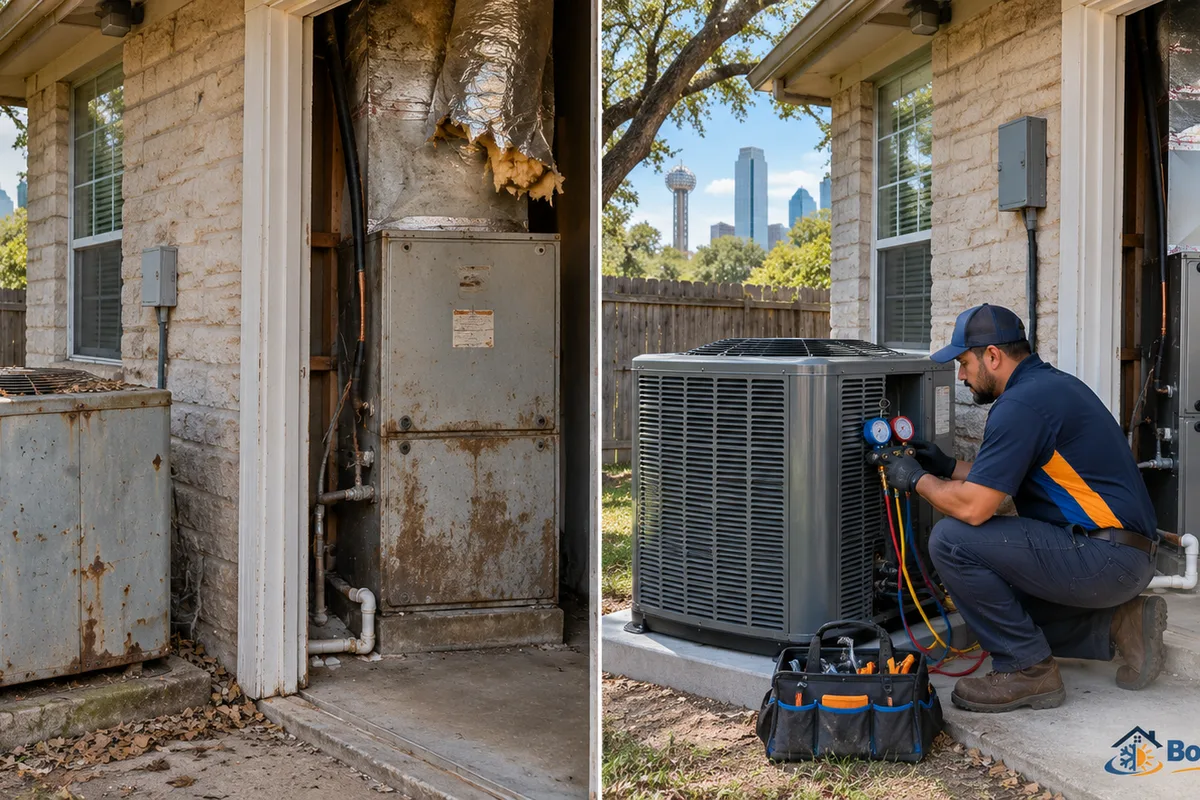
Side-by-side view of an aging residential HVAC system and a clean professionally installed matched indoor and outdoor replacement system
A replacement scope should account for the complete system, not only the outdoor unit.

Get a clear diagnosis and written scope before committing to a repair or replacement. Bold HVAC Dallas can assess the equipment, discuss practical options, and define the work your property needs.

Call to Schedule
Helpful answers

Questions About Hiring HVAC Contractors in Dallas, Texas

How quickly can an HVAC contractor in Dallas respond to a cooling failure?+

Response time depends on technician availability, location, weather-driven demand, and whether the job requires a standard repair or specialty part. Cooling calls increase during sustained North Texas heat, so describe any complete shutdown, water leak, burning odor, electrical issue, or vulnerable occupant when scheduling. The contractor can then set the appropriate priority and prepare for the likely equipment type.

What should a Dallas HVAC replacement estimate include?+

A replacement estimate should identify the equipment model numbers, capacity, efficiency rating, labor, included modifications, warranty terms, permit responsibility, exclusions, and payment schedule. In Dallas, also clarify condensate protection, outdoor-unit placement, electrical work, duct transitions, equipment removal, and commissioning. Comparable bids must cover comparable work.

Do HVAC contractors in Dallas TX need to perform a load calculation?+

A load calculation is the sound basis for selecting replacement capacity when the existing size is uncertain or the building has changed. Manual J accounts for factors such as insulation, windows, orientation, air leakage, and design temperatures. It is especially useful after additions, window upgrades, insulation work, or persistent room-to-room comfort problems.

Should I repair an older air conditioner or replace it?+

Repair can make sense when the fault is limited and the rest of the system is in good condition; replacement becomes more reasonable when major failures, repeated service needs, poor comfort, or mismatched components raise long-term cost and risk. Ask for the confirmed defect, repair warranty, equipment condition, and a complete replacement scope before comparing the choices.

Can a Dallas TX HVAC contractor fix uneven temperatures between rooms?+

Yes, but the contractor must identify whether the cause is airflow, duct design, leakage, controls, insulation, solar exposure, or equipment operation. In remodeled Dallas homes, additions and changed room layouts can alter the original load and duct balance. Static-pressure testing, temperature measurements, and inspection of supply and return paths can narrow down the cause.

How long does residential HVAC replacement take?+

A straightforward residential changeout is often completed within a working day, while duct changes, electrical upgrades, difficult access, multiple systems, or permit coordination can extend the schedule. The contractor should confirm equipment availability and identify property-specific work before setting the timeline. Commercial and multifamily projects usually require additional coordination.

What maintenance should HVAC contractors in Dallas perform?+

Maintenance should include operating checks, filter and coil inspection, electrical testing, condensate drain review, thermostat verification, and evaluation of temperature and airflow where needed. Heat pumps and furnaces also require checks specific to their heating components and safety controls. A written record makes developing problems easier to track between visits.

Plan the next step

Plan Your HVAC Work With Clear Information

Tell Bold HVAC Dallas what the system is doing, what type of property you have, and whether you need repair, maintenance, or a replacement assessment. Our team will help define the next practical step.