The furnace will not start
If thermostat adjustments and a clean, correctly installed filter do not restore operation, the system may have an ignition, control, electrical, or safety-switch fault.
Serving Dallas, Texas & surrounding areas
24/7 Emergency Response
Get a clear diagnosis and a practical repair plan for weak heat, failed starts, unusual noises, and other residential furnace problems.
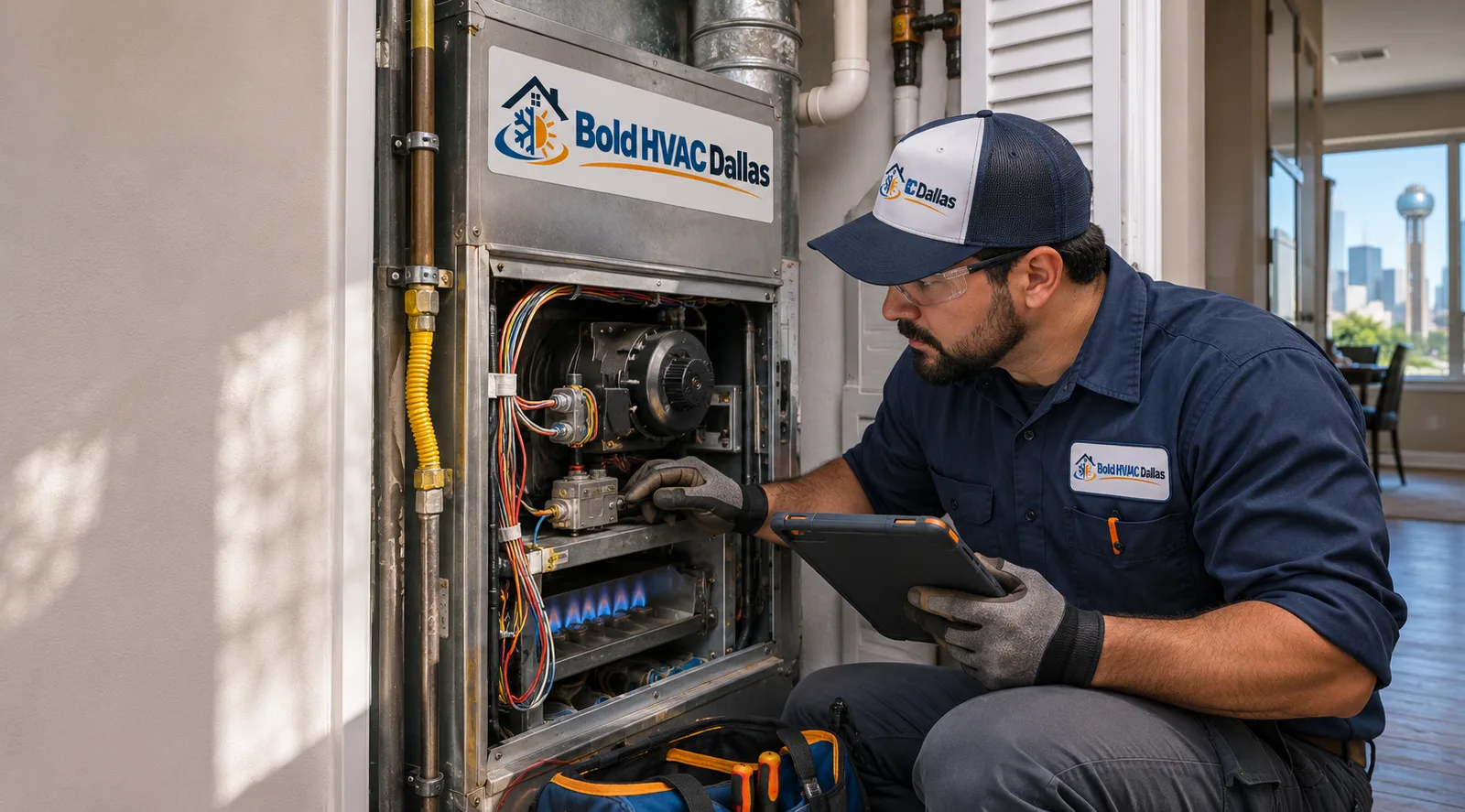
When the heat stops working during a North Texas cold spell, you need an accurate diagnosis rather than a quick guess. Bold HVAC Dallas provides furnace repair Dallas TX homeowners can use for failed ignition, short cycling, weak airflow, cold air at the registers, unusual noises, and systems that will not start.
Our hvac service experts around Dallas inspect the heating system, identify the failed component, and explain the repair before work begins. The goal is to correct the underlying fault and verify safe operation, not simply reset the equipment and leave. Dallas weather can swing quickly in winter, so a furnace that works intermittently deserves attention before the next temperature drop.
Service starts with the symptoms you have noticed and a review of the thermostat settings. The technician then checks the equipment in a logical order. You receive a clear account of what failed, what can be repaired, and whether any other condition is affecting furnace performance.
A furnace that does not produce heat may have a thermostat, control board, ignition, gas supply, limit-switch, or airflow problem. Modern gas furnaces often use a hot-surface igniter or spark ignition rather than a standing pilot. A dirty flame sensor can allow ignition and then shut the burners down within seconds. An open limit switch may point to overheating caused by restricted airflow, a dirty filter, a failing blower, or blocked supply and return paths.
Short cycling needs careful diagnosis because it describes a symptom, not a single failed part. The cause may be poor airflow, an oversized unit, a thermostat issue, or a safety control responding to excessive temperature. Rattling, scraping, squealing, and humming can indicate loose panels, blower-wheel contact, worn motor components, or an electrical fault.
Low airflow is especially noticeable when warm air barely reaches distant rooms. The technician may inspect the filter, blower assembly, evaporator coil, accessible duct connections, and temperature rise across the furnace. Temperature rise must stay within the range printed on the equipment data plate. That measurement helps determine whether the furnace is moving enough air while firing.
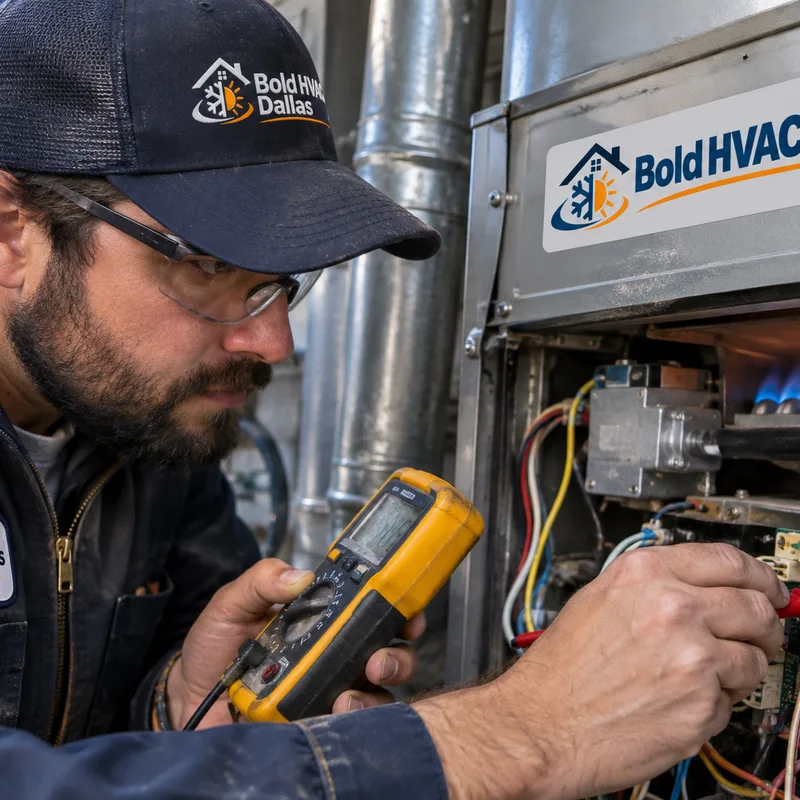
If thermostat adjustments and a clean, correctly installed filter do not restore operation, the system may have an ignition, control, electrical, or safety-switch fault.
A dirty flame sensor is one possible cause, but venting, pressure-switch, control, and gas-combustion issues must also be considered.
A clogged filter, dirty blower wheel, motor problem, restricted coil, or duct issue can reduce airflow and trigger overheating.
Repeated starts and stops can increase wear. Diagnosis should include thermostat operation, airflow, temperature rise, and furnace sizing history.
Scraping, grinding, banging, or persistent squealing can signal a loose or damaged mechanical component. Shut the system down if the noise is severe.
Leave the home and contact the gas utility or emergency services from a safe location. Do not operate switches or attempt furnace troubleshooting.
The technician asks when the problem began, whether it is constant or intermittent, and what you have observed at the thermostat, furnace, and supply registers.
Testing may cover thermostat signals, electrical connections, fault codes, ignition sequence, flame sensing, pressure-switch operation, blower performance, filter condition, and safety controls. Gas-fired equipment also requires attention to combustion and venting conditions.
You receive a specific diagnosis and repair scope. If the furnace has several costly defects or a compromised heat exchanger, the technician can explain why replacement may deserve consideration without pressuring you into an immediate decision.
The failed component is repaired or replaced after you approve the work. Common service parts include igniters, flame sensors, capacitors, contactors, blower components, thermostats, and control boards.
The furnace is cycled after repair. The technician confirms that it starts, heats, moves air, and shuts down correctly, with safety controls and temperature rise checked as appropriate.
Furnace repair in Dallas typically costs about $150 to $600, while complex electrical, blower, control-board, or gas-valve repairs may run $600 to $1,500 or more. A basic diagnostic visit or minor adjustment is generally at the lower end, and major parts plus labor raise the total.
Final price depends on the failed component, furnace type, equipment age, part availability, access, and whether more than one fault is present. After testing the system, the technician confirms the exact cost before the approved repair begins.
Many furnace problems are reasonable to repair, particularly when the equipment is otherwise sound and the failed part is available. A repair may make sense for a worn igniter, faulty capacitor, damaged thermostat, dirty flame sensor, or isolated blower problem. The decision changes when a furnace has repeated breakdowns, obsolete controls, several expensive faults, or a heat exchanger concern.
A cracked or failed heat exchanger is a safety issue because combustion gases may enter the circulating air. It should be assessed by a trained technician using appropriate inspection and testing methods. Carbon monoxide is colorless and odorless, so every home with fuel-burning equipment should have working carbon monoxide alarms installed according to the alarm manufacturer's instructions and applicable requirements.
Dallas has a mix of older houses and newer construction. In established neighborhoods such as Oak Cliff, older mechanical closets and past equipment changes can complicate access or reveal mismatched components. In Lakewood, older homes may have additions or altered duct systems that affect airflow between rooms. Newer homes in Far North Dallas can still develop control, ignition, and installation-related faults. The equipment and its actual operating conditions determine the repair plan.
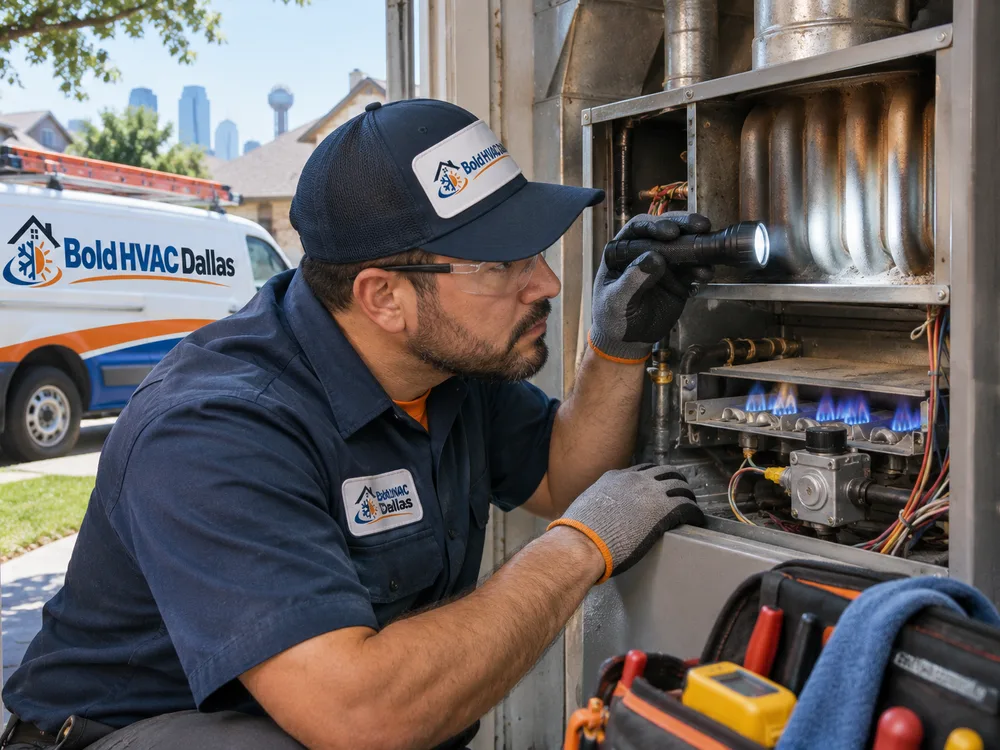
A few basic checks may resolve a simple operating issue. Confirm that the thermostat is set to heat, the temperature setting is higher than the room temperature, and the furnace switch has not been turned off accidentally. Check the electrical panel for a tripped breaker. Inspect the filter and replace it if it is dirty, using a size and type suitable for the system.
If the furnace has a front access panel, make sure it is seated correctly because many units have a door safety switch. Do not remove burner components, bypass a safety switch, reset the system repeatedly, or attempt gas-valve and electrical repairs. Repeated resets can hide an intermittent fault without correcting it.
If you smell gas, hear a carbon monoxide alarm, see soot near the furnace, or experience symptoms such as headache or dizziness that improve after leaving the home, move to fresh air and seek immediate help from the appropriate utility or emergency authority. Oncor delivers electricity across much of Dallas, while gas service depends on the property and provider. Utility outages and fuel-supply problems should be ruled out before furnace components are replaced.
Address intermittent heat before a cold night turns a manageable fault into a complete loss of heating. Describe the symptoms and arrange a diagnostic visit with Bold HVAC Dallas.
Call to ScheduleMany furnace repairs can be completed during one visit when the fault is clear and the correct part is available. Timing depends on technician availability, safe access, diagnosis, and whether the furnace needs a model-specific control board, blower motor, gas valve, or other ordered component. Demand can increase when a North Texas cold front causes many heating systems to start running at once.
Repair is usually worth considering when the furnace is safe, otherwise reliable, and needs one reasonably priced component. Replacement deserves a closer look when there is heat exchanger damage, repeated failure, poor parts availability, or several major repairs at the same time. The decision should compare the repair scope with the furnace's condition rather than rely on age alone.
A furnace that lights and shuts down within seconds may have a flame-sensing, pressure-switch, venting, control, or gas-combustion problem. A contaminated flame sensor is common, but cleaning a sensor without testing the full ignition sequence can miss the real fault. A technician should review stored fault codes and observe the sequence of operation.
Yes, a severely restricted filter can reduce airflow enough to overheat the furnace and open its high-limit safety switch. The burners may shut off while the blower continues running, which can feel like cool air from the registers. Replacing the filter may help, but repeated limit trips require testing of the blower, coil, duct system, and temperature rise.
A furnace making a loud banging, grinding, or scraping noise should be turned off until it is inspected. Those sounds may indicate blower-wheel contact, a loose component, delayed ignition, or another condition that can worsen with operation. If there is a gas odor, leave the property and contact the gas utility or emergency services from a safe location.
A proper repair visit should verify the repaired function and check relevant safety controls before the furnace returns to service. Depending on the complaint, that may include ignition sequence, flame signal, limit operation, venting condition, electrical connections, and temperature rise. Dallas homes with gas furnaces should also have working carbon monoxide alarms.
Tell Bold HVAC Dallas what the furnace is doing, when the problem started, and whether any fault code is visible. A focused diagnostic visit provides a clear repair plan before work begins.