System Not Cooling
If the equipment runs but the house stays warm, testing can isolate airflow restrictions, electrical faults, refrigerant circuit problems, or compressor and fan issues.
Serving Dallas, Texas & surrounding areas
24/7 Emergency Response
Get a clear diagnosis and practical repair plan for weak cooling, heating failures, airflow problems, and other comfort issues.
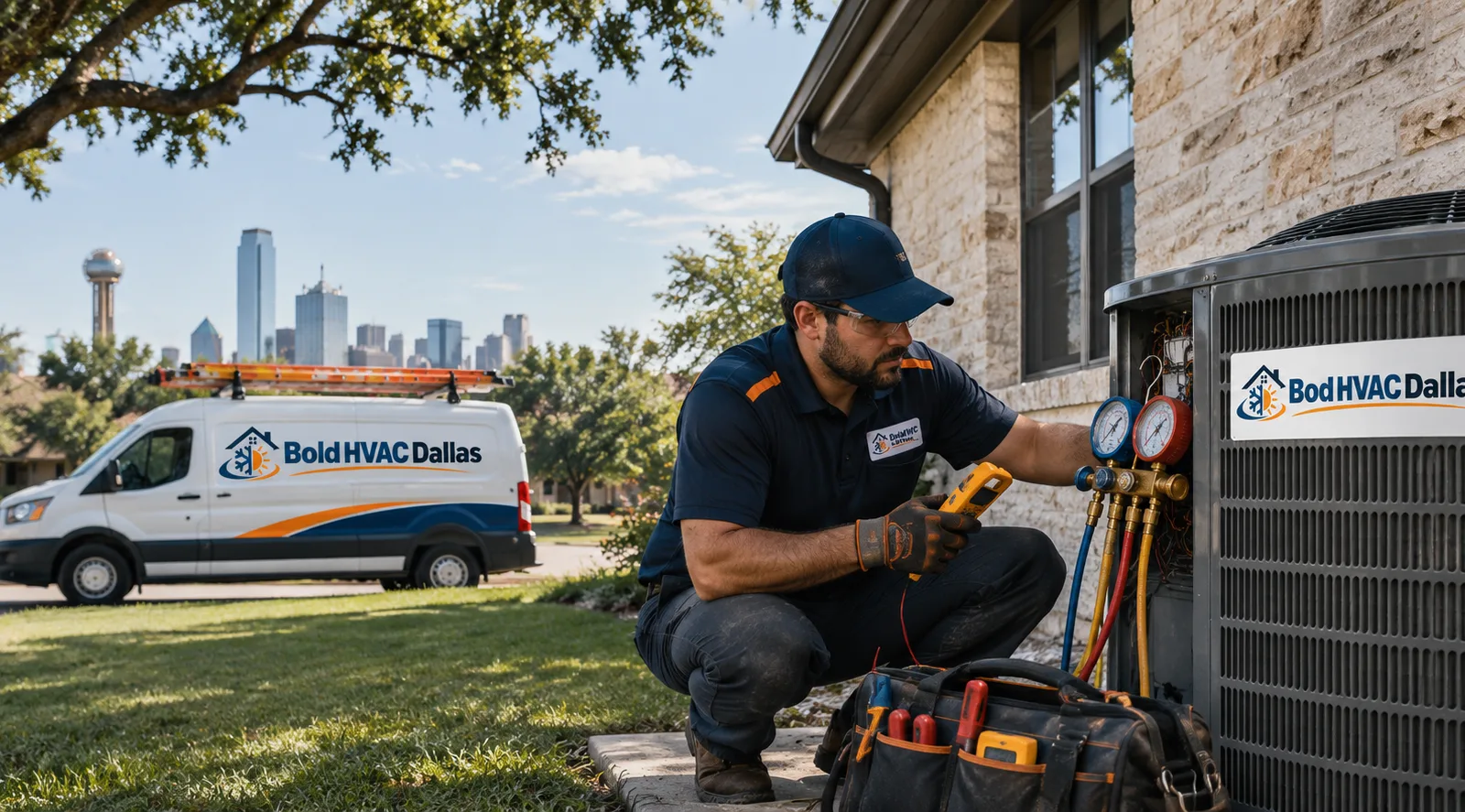
When your system stops cooling during a hot North Texas afternoon, a quick diagnosis matters. Bold HVAC Dallas provides Dallas HVAC repair for air conditioners, heat pumps, furnaces, thermostats, and indoor airflow problems. We identify the failed component, explain the repair options, and confirm the scope before work starts.
We are a professional HVAC service company in Dallas that approaches each repair by testing the system rather than replacing parts based on symptoms alone. A service visit may include checking thermostat operation, electrical connections, capacitors, contactors, refrigerant pressures, temperature split, blower performance, condensate drainage, and filter condition. The exact checks depend on the equipment and the problem you report.
Dallas heat places long operating demands on cooling equipment. A dirty outdoor coil, restricted filter, weak capacitor, or failing condenser fan can reduce performance and contribute to shutdowns. Heating problems may involve ignition components, flame sensors, limit switches, heat strips, or reversing valves. Finding the cause first helps avoid unnecessary work.
If the equipment runs but the house stays warm, testing can isolate airflow restrictions, electrical faults, refrigerant circuit problems, or compressor and fan issues.
We diagnose furnaces and heat pumps that fail to start, blow cool air, cycle off early, or leave parts of the home uncomfortable.
Frequent starts and stops can stem from thermostat placement, restricted airflow, safety controls, electrical components, or equipment sizing. Testing identifies the likely cause.
Blower motors, dirty coils, clogged filters, closed dampers, duct restrictions, and return-air limitations can all affect airflow at the registers.
Water near an indoor unit may indicate a blocked condensate line, damaged drain pan, frozen evaporator coil, or failed condensate pump.
Grinding, buzzing, rattling, burning smells, and persistent musty odors warrant inspection before a developing fault causes broader damage.
Good HVAC repair in Dallas begins with evidence. A technician should listen to the symptom, inspect the equipment, reproduce the problem when possible, and test the components tied to that failure. For cooling complaints, that may mean measuring supply and return temperatures, checking static pressure, inspecting the evaporator and condenser coils, and evaluating the refrigerant circuit. Refrigerant should not be added without investigating why the charge is low.
Electrical diagnosis may include checking voltage, amperage, capacitance, control signals, and safety switches. A swollen capacitor or burned contactor may be visible, but many faults require meter readings. Gas furnaces also need attention to ignition, flame sensing, venting, and safety controls. Heat pumps require checks in both operating modes because a reversing valve or auxiliary heat fault can produce different symptoms as outdoor conditions change.
Once the cause is identified, you should receive an explanation of the failed part, the proposed work, and whether other conditions could affect the repair. Equipment age, parts availability, compressor condition, heat-exchanger safety, and the cost of repeated failures may influence whether repair remains sensible.
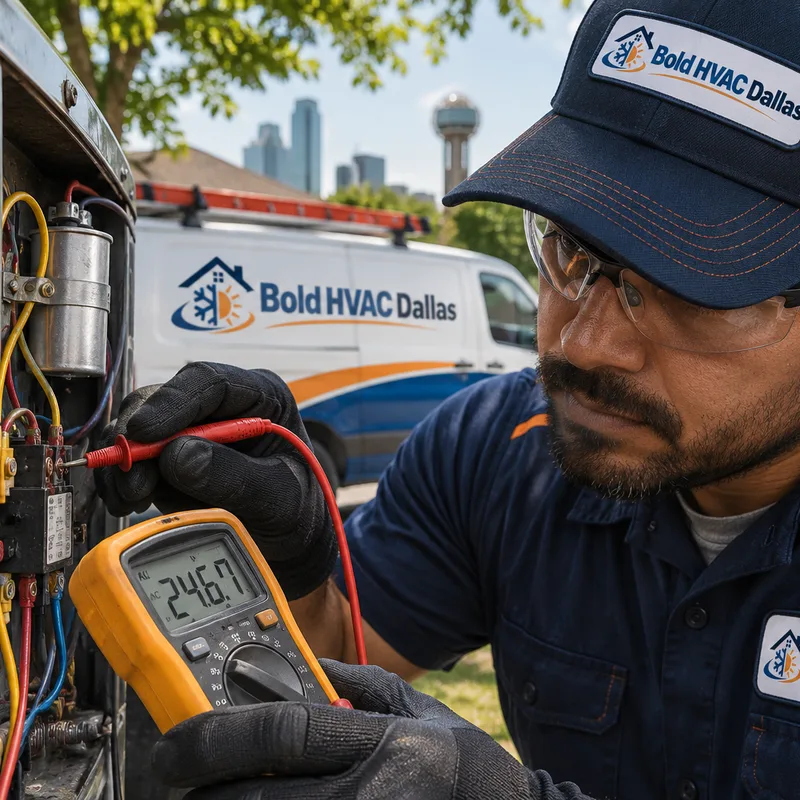
Share what the system is doing, when the issue began, and whether breakers, filters, thermostat settings, or unusual sounds are involved. These details guide the initial inspection.
The technician checks the relevant indoor and outdoor equipment, then uses measurements to distinguish the root cause from secondary symptoms.
You receive an explanation of the findings and the proposed repair before work proceeds. If more than one practical option exists, the differences should be clear.
After an authorized repair, the system is operated through a complete cycle. Temperatures, airflow, electrical operation, drainage, and controls are checked as applicable.
The technician can identify filter needs, coil condition, drain concerns, or other maintenance items that may reduce the chance of another preventable interruption.
Repair conditions vary with the building. In Lakewood, older homes may have equipment added long after the original construction, so return-air capacity and duct routing deserve attention during airflow diagnosis. Oak Cliff also has many older properties where additions and past equipment changes can leave rooms with uneven temperatures. These conditions do not prove the duct system is at fault, but they affect how a technician interprets pressure and airflow readings.
In Preston Hollow, larger floor plans may use multiple systems or zoning controls. A comfort problem in one area can involve a zone damper, sensor, control board, or a single piece of equipment rather than the entire home. Uptown condominiums and townhomes may have tighter mechanical spaces and building access requirements, which can affect the repair process and parts handling.
The Dallas climate also makes condensate management important. Air conditioners remove moisture as they cool, producing water that must travel through a drain line or pump. A blockage can trigger a float switch or cause water damage. Outdoor units also need enough clear space for airflow, particularly when cottonwood, grass clippings, leaves, or nearby plants collect around the coil.
Dallas HVAC repairs typically cost about $150 to $650, while major electrical, blower, refrigerant, coil, or compressor work can range from roughly $700 to several thousand dollars. A diagnostic visit may be priced separately or applied toward authorized work, depending on the service arrangement.
Final cost depends on the failed component, equipment type, refrigerant, warranty status, parts availability, access, and whether another fault caused the failure. An older system may also require a repair-versus-replacement discussion. The exact cost is confirmed after the equipment is inspected and the problem is diagnosed.
The best HVAC repair in Dallas, TX is the repair that addresses the actual failure and leaves you with a clear understanding of the equipment's condition. Ask what tests support the diagnosis, whether the quoted work includes labor and parts, and how the system will be checked afterward. If a refrigerant leak is suspected, ask how it will be located. If a compressor or heat exchanger is involved, ask whether the rest of the system was evaluated before a major recommendation was made.
A low initial price does not always mean cheap HVAC repair in Dallas once incomplete diagnosis, repeat visits, or unnecessary parts are considered. Compare the full written scope. You should know whether the proposal covers a temporary measure, a component repair, or a more extensive correction.
Bold HVAC Dallas works with customers in Dallas, TX 75201 and surrounding North Texas communities. Our goal is straightforward: diagnose the complaint, explain the findings in plain language, and provide a repair plan suited to the equipment and its condition.

If your heating or cooling system is failing, arrange an inspection before a small fault causes a longer shutdown or damage to other components.
Call to ScheduleMany common repairs can be completed during the initial visit when the required part is available. The timeline depends on access, diagnosis, equipment model, and parts availability. During periods of extreme North Texas heat, demand for motors, capacitors, control boards, and refrigerant-related work can also affect scheduling.
Turn the system off if you smell burning, hear grinding, see water near electrical components, notice ice buildup, or find that a breaker repeatedly trips. Continued operation can worsen some failures. If the problem is limited to weak performance without a safety concern, describe the symptoms when arranging service and follow the guidance provided.
Some refrigerant leaks can be repaired, but the right choice depends on the leak location, coil condition, refrigerant type, equipment age, and repair cost. Simply adding refrigerant does not correct a leak. A proper diagnosis should confirm system pressures and investigate the source before recommending repair or replacement.
An air conditioner that runs without cooling may have restricted airflow, a dirty coil, a failed capacitor or fan, a refrigerant problem, duct leakage, or compressor trouble. Dallas summer conditions can expose weak components because systems run for long periods. Temperature, pressure, airflow, and electrical measurements are needed to separate these causes.
Repair is often reasonable when the fault is isolated, the equipment is otherwise sound, and parts remain available. Replacement deserves consideration when a major component has failed, repairs are recurring, the refrigerant creates service limitations, or the system cannot meet the home's load. A written comparison should account for the present repair, not rely on age alone.
Confirm the thermostat mode and setpoint, check whether the filter is severely clogged, and look for a tripped breaker once. Do not keep resetting a breaker that trips again. You can also note whether the indoor blower and outdoor unit are operating, but leave panels closed and avoid touching electrical or refrigerant components.
Uneven temperatures can often be improved without equipment replacement when the cause is a filter, blower setting, damper, duct restriction, thermostat issue, or return-air limitation. Homes with additions or multiple floors may require airflow testing because the equipment can operate correctly while distribution remains poor.
Tell Bold HVAC Dallas what the system is doing, and schedule a diagnostic visit to identify the cause, review the options, and confirm the repair scope.