Visible Buildup
Dust mats on return grilles, debris inside the accessible cabinet, or dirt on the blower wheel indicate that an inspection is worthwhile. A dirty grille alone does not prove that every duct needs cleaning.
Serving Dallas, Texas & surrounding areas
24/7 Emergency Response
Clear accumulated dust and debris from accessible system components with a careful inspection, a defined scope, and protection for your home.
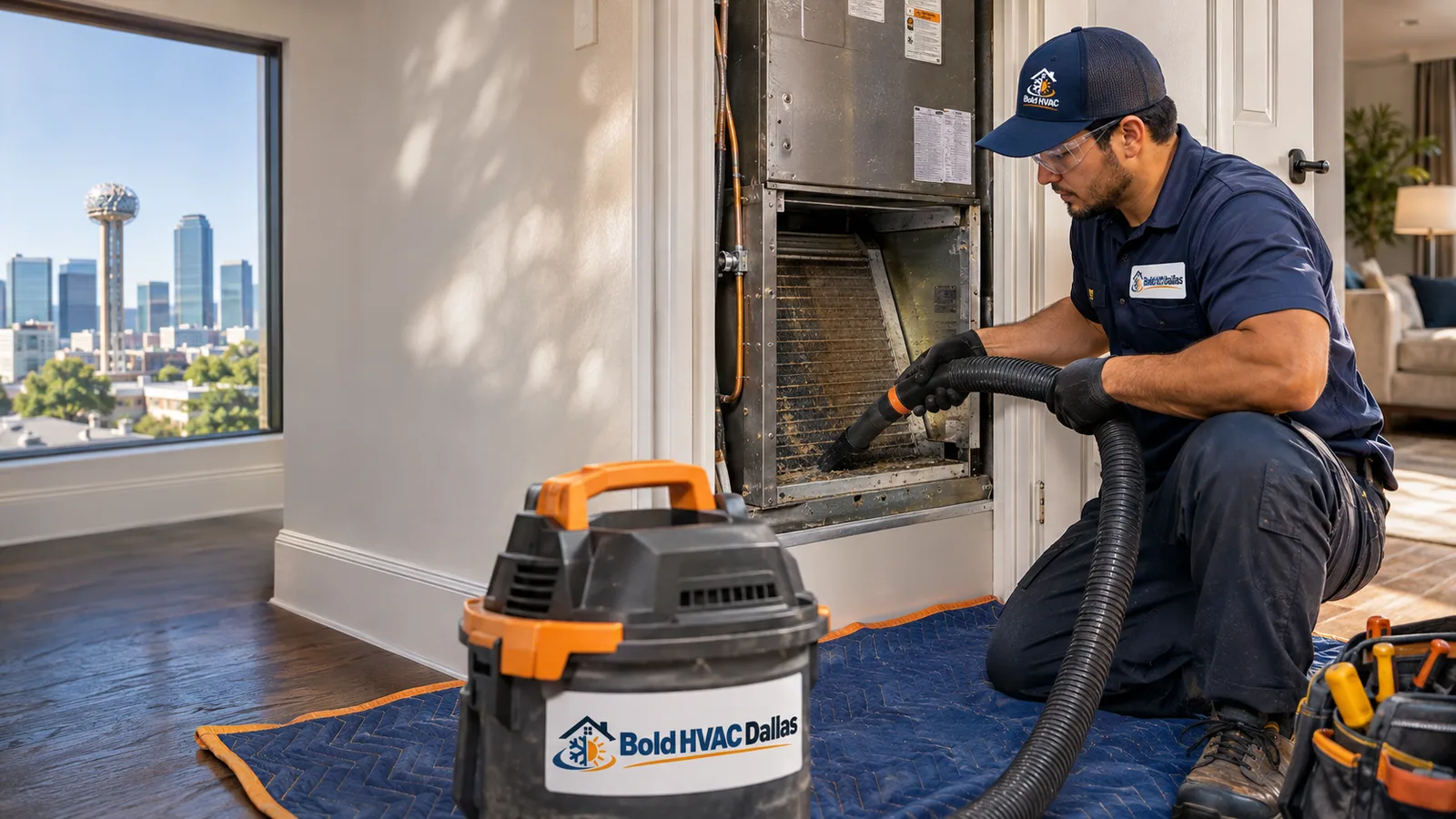
HVAC cleaning Dallas homeowners request should address the condition of the equipment, not rely on a one-size-fits-all package. Dust can collect on return grilles, blower assemblies, evaporator coil surfaces, drain pans, and accessible duct components. The right scope depends on what an inspection finds, where the buildup is located, and whether moisture or a mechanical problem has contributed to it.
Dallas cooling systems often work hard through long stretches of hot weather. Longer run times move more household air through the return and filter, so filter fit, replacement frequency, and equipment cleanliness deserve attention. Our HVAC service experts serving Dallas, TX inspect accessible components, explain which areas need cleaning, and identify conditions that cleaning alone will not correct.
Bold HVAC Dallas serves homes and businesses in Dallas, including properties near downtown where equipment may be installed in closets, ceilings, rooftops, or other tight spaces. Access affects the tools, time, and containment needed. Before work begins, you should understand what will be cleaned, how surrounding areas will be protected, and whether any component needs separate repair.
A complete scope starts at the return side and follows the air path through the equipment. Depending on system design and condition, work may include cleaning return grilles, the blower compartment, blower wheel, accessible cabinet surfaces, evaporator coil surfaces, condensate pan, and supply registers. Technicians may use HEPA-filtered vacuums, soft-bristle agitation, compressed-air tools, or coil-safe products selected for the component.
The evaporator coil needs particular care. Bent fins restrict airflow, and harsh chemicals can damage finishes or leave unwanted residue. The condensate pan and drain area should also be checked because cooling removes moisture from indoor air. Standing water, corrosion, slime, or repeated drain blockage can point to a drainage or equipment issue that cleaning alone will not solve.
Cleaning the air handler is different from cleaning an entire duct system. A clear written scope should state whether duct interiors are included, which ducts are accessible, and how debris will be contained. It should also distinguish normal household dust from suspected microbial growth, pest contamination, damaged insulation, or construction debris. Those findings can change the method and may require specialized remediation or repairs.
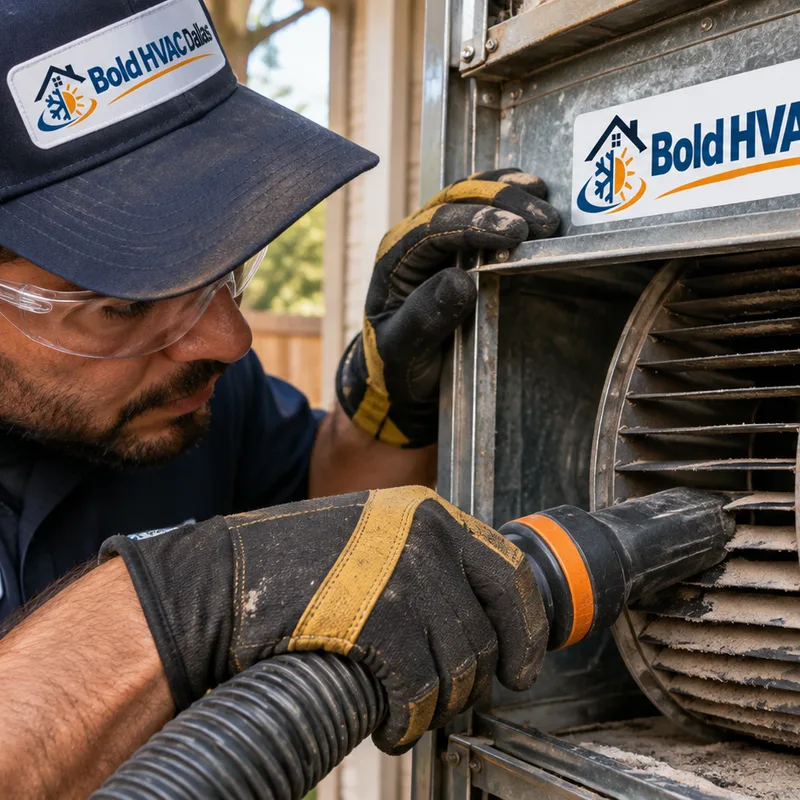
Dust mats on return grilles, debris inside the accessible cabinet, or dirt on the blower wheel indicate that an inspection is worthwhile. A dirty grille alone does not prove that every duct needs cleaning.
Drywall sanding, flooring work, and other renovations can release fine particles. If returns were left open or the system ran during construction, filters and internal components should be checked.
Debris on a blower wheel or coil may contribute to airflow trouble, but blocked filters, closed dampers, duct damage, and mechanical faults can cause similar symptoms. Diagnosis should come before cleaning.
Odors when the system starts can come from dust, a wet drain pan, microbial contamination, pests, or another source. Cleaning helps only when the odor source is correctly identified.
Moisture around the air handler calls for prompt attention. A clogged drain, frozen coil, damaged pan, or installation issue may need correction in addition to cleanup.
A filter that leaves gaps can allow dust to bypass the media and collect inside the cabinet. The correct dimensions and airflow direction matter as much as routine replacement.
We review the equipment location, filter, return and supply areas, cabinet, blower compartment, coil access, and condensate components. Photos can document buildup and access limitations before work starts.
You receive an explanation of the components that need attention and any areas that cannot be safely accessed without disassembly. Mechanical repairs, duct replacement, and specialized contamination work are identified separately.
Floor coverings and containment help keep loosened debris out of occupied rooms. The system is shut down when required, and nearby electronics or finished surfaces are protected.
Technicians use controlled vacuum collection and component-appropriate agitation. Coil fins, electrical connections, insulation, drain parts, and cabinet seals are handled according to their condition.
Panels are secured, the filter is checked for proper fit, and the system is run to verify normal startup and airflow. Any observed concern that falls outside the cleaning scope is explained.
Equipment access varies widely across Dallas properties. In downtown high-rises, building rules, elevator access, parking, and allowable work hours may affect scheduling. Older homes in Oak Cliff can have equipment retrofitted into closets, crawl spaces, or attics, while newer homes in Far North Dallas may have multiple systems or zoned layouts. These are practical differences because each air handler needs its own inspection and cleaning plan.
Dallas heat also affects scheduling. Attic equipment can become difficult and unsafe to service during the hottest part of the day, so access and working conditions should be discussed in advance. Commercial spaces may require coordination with property management and careful containment so occupied areas remain protected.
A professional assessment should separate cleanliness from performance. Cleaning cannot repair a failing motor, refrigerant problem, damaged duct, or undersized system. It also cannot guarantee the removal of every indoor allergen because furnishings, pets, outdoor air, and daily activity affect indoor particles. Its purpose is to remove accessible accumulation and help the equipment operate with a clean filter and unobstructed surfaces.

HVAC cleaning in Dallas typically costs about $200 to $500 for focused cleaning of one accessible residential system, while broader work involving multiple systems, coils, blowers, or ductwork may range from $500 to $1,500 or more. These are general estimates, not a quote.
Final price depends on the number of systems, component condition, equipment location, access, contamination type, and whether duct cleaning is included. Rooftop, attic, or tightly enclosed equipment may require more labor. The exact cost is confirmed after an on-site inspection defines the cleaning scope.
Be cautious with offers that promise whole-system cleaning without first identifying the equipment, number of zones, duct material, and access points. Flexible ducts, internally lined ducts, bare sheet metal, and fiberglass duct board cannot always be handled with the same agitation method. Aggressive brushing can damage liners or flexible duct walls.
Ask what components are included, how debris will be captured, and whether before-and-after photos are available. You should also know what happens if the technician finds wet insulation, disconnected ducts, pest evidence, corrosion, or suspected microbial growth. A responsible contractor pauses and explains the finding rather than covering it with fragrance or an unneeded coating.
Filter advice should match the system. A higher MERV rating captures smaller particles, but the filter must also be compatible with the equipment and available static pressure. Installing overly restrictive media can reduce airflow. Correct sizing, a snug rack fit, and a replacement schedule based on actual conditions are practical parts of keeping cleaned equipment in better condition.
If dust, odors, post-construction debris, or visible buildup has raised concerns, start with an inspection that separates useful cleaning from repairs or work your system does not need.
Call to ScheduleFocused cleaning of one accessible residential system often takes a few hours, while multiple units or broader duct work can require much of a day. Attic access, rooftop coordination, heavy buildup, and the time needed to open and reassemble components affect the schedule. Dallas commercial and high-rise properties may also require building approval or restricted work hours.
You can usually remain at home during routine HVAC cleaning, although staying away from the immediate work area is helpful. Technicians may shut the system off and use containment around returns or equipment. People with strong sensitivities should discuss the cleaning products, dust-control method, and ventilation plan before work begins.
Air duct cleaning is included only when it is listed in the agreed scope. Cleaning an air handler, blower, coil, or drain pan does not automatically mean every supply and return duct will be cleaned. Ask which duct runs and registers are included, what access points are required, and whether your duct material is suitable for the proposed method.
Cleaning can help when debris on a filter, blower, or coil is restricting airflow, but it cannot fix every performance problem. Duct leakage, a failing motor, refrigerant issues, closed dampers, poor system sizing, and insulation conditions require separate diagnosis. Dallas cooling demand makes it especially important to identify the cause rather than assume dirt is responsible.
There is no universal calendar interval for full-system cleaning; the need should be based on inspection and actual buildup. Homes with recent construction dust, filter bypass, pest contamination, moisture problems, or visible component debris may need attention sooner. Filters should be checked regularly during heavy cooling use and replaced when loaded or according to equipment and filter guidance.
Routine cleaning is not a substitute for proper assessment and moisture correction when microbial growth is suspected. The source of water must be found, and contaminated porous insulation or duct material may need removal rather than surface cleaning. Ask for clear documentation of the affected area before authorizing antimicrobial products or coatings.
Clear a path to the thermostat, indoor unit, return grilles, and any attic or closet access. Secure pets and move fragile items away from registers. If equipment is in a managed Dallas building, confirm parking, access, elevator, and work-hour requirements before the appointment.
Tell Bold HVAC Dallas what you have noticed and where the equipment is located. We will help define an appropriate cleaning scope, explain access or condition concerns, and confirm the work before cleaning begins.