AC Repair
Diagnosis and repair for warm air, weak airflow, short cycling, unusual noise, water near the indoor unit, thermostat trouble, and systems that will not start.
Serving Dallas, Texas & surrounding areas
24/7 Emergency Response
Reliable air conditioning repair, maintenance, replacement, and installation for homes and businesses facing North Texas heat.

When you need AC Dallas service, the first priority is an accurate diagnosis. A system that runs without cooling may have a failed capacitor, low airflow, a refrigerant issue, or a problem in the electrical circuit. Replacing parts before identifying the cause can add expense without restoring dependable operation.
Bold HVAC Dallas provides air conditioning repair, preventive maintenance, system replacement, and new installation. We work on central split systems, heat pumps, packaged equipment, and ductless mini-splits. Our work as Dallas' local HVAC service starts with the equipment, controls, airflow, and operating conditions rather than assumptions based on one symptom.
Dallas cooling equipment works through long periods of high outdoor temperatures. Attic heat can also increase the burden on ductwork routed outside the conditioned space. Proper capacity, clean coils, unrestricted airflow, sound duct connections, and a correctly charged refrigerant circuit all affect comfort. Those factors should be assessed together when recurring trouble or uneven cooling suggests more than a simple failed part.
Diagnosis and repair for warm air, weak airflow, short cycling, unusual noise, water near the indoor unit, thermostat trouble, and systems that will not start.
Seasonal service can include filter and airflow checks, coil inspection, condensate drain evaluation, electrical testing, temperature measurements, and a review of visible wear.
When repair is no longer practical, replacement planning considers the property's cooling load, duct condition, equipment efficiency, available electrical service, and installation requirements.
Installation includes appropriate equipment selection, indoor and outdoor unit placement, refrigerant piping, condensate management, controls, startup testing, and airflow verification.
A ductless mini-split can serve an addition, converted room, detached workspace, or another area where extending existing ducts is difficult or inefficient.
Commercial service addresses rooftop and split equipment, thermostats, drainage, airflow, and operating issues that can disrupt customers, tenants, or employees.
A useful diagnosis separates the symptom from the cause. If an outdoor unit hums but the fan does not turn, the technician should assess the motor, capacitor, contactor, and incoming power. If the indoor coil freezes, possible causes include restricted airflow, a dirty evaporator coil, blower trouble, or a refrigerant problem. Ice itself is evidence of a fault, not the underlying diagnosis.
Testing may include supply and return air temperatures, static pressure, electrical readings, thermostat signals, and refrigerant measurements when appropriate. The condensate drain and safety switches also deserve attention because Dallas air conditioners remove moisture as they cool. A blocked drain can cause leakage or shut the system down.
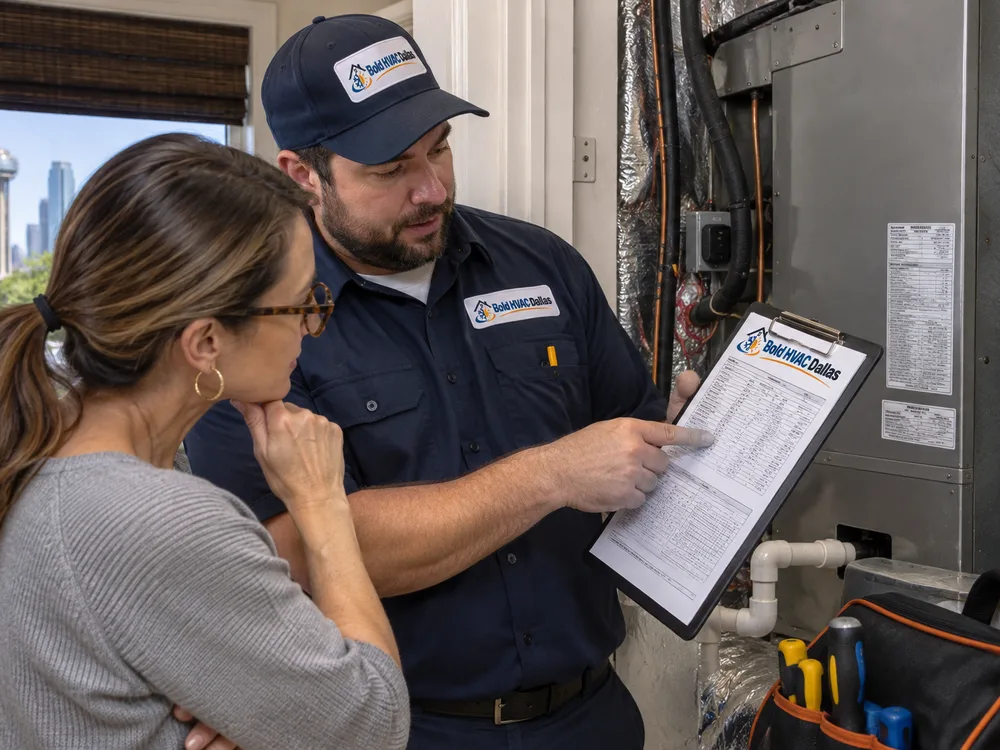
After testing, you should receive a clear description of the fault, the proposed repair, and any condition that may affect reliability. If the equipment has several problems, the decision should compare the repair scope with the age, condition, efficiency, and compatibility of the full system.
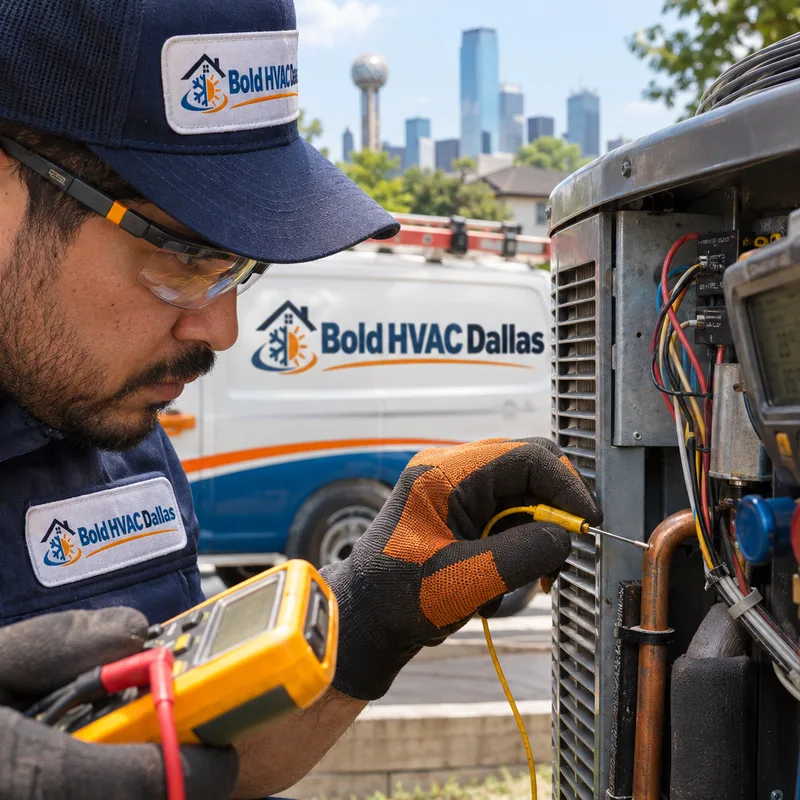
North Texas summers place sustained demand on air conditioning equipment, so sizing and installation quality matter as much as the efficiency rating printed on the unit. Oversized equipment may satisfy the thermostat quickly while cycling frequently and providing less consistent moisture removal. Undersized equipment may run continuously during demanding weather and still struggle to hold the set temperature. A load calculation is more dependable than selecting equipment solely by matching the old unit's nominal tonnage.
Property type also changes the plan. Historic homes in Swiss Avenue may have limited chases for ducts and refrigerant lines, requiring careful routing that respects existing finishes. Lakewood includes older homes and later additions where duct alterations can create room-to-room comfort differences. Uptown's condos and mixed-use buildings can involve equipment-access rules, shared building systems, or coordination with property management. In Oak Lawn, dense development may limit outdoor-unit access and placement. Preston Hollow's larger homes may use multiple systems or zoning, making control and airflow checks part of the diagnosis.
Oncor operates the electric delivery network across much of Dallas, while retail electricity plans vary by customer. Air conditioners depend on stable power and sound electrical components, but utility service concerns and equipment faults require different remedies. A technician can determine whether power reaches the disconnect and equipment correctly; utility-side issues must be handled by the appropriate electric provider.
Describe what changed, when it began, whether the problem affects the entire property, and any recent electrical, thermostat, filter, or renovation work.
The technician evaluates relevant components, safety controls, airflow, drainage, electrical operation, and refrigeration performance based on the reported problem.
You receive an explanation of the confirmed fault, recommended work, and factors that may affect the choice between repair and replacement.
Approved repairs or installation work are completed using parts and procedures appropriate for the equipment and stated scope.
The system is started and checked for proper control response, temperature change, airflow, drainage, and normal operation before the work is considered complete.
Repair is often sensible when the failure is isolated, compatible parts are available, and the rest of the system is in sound condition. A failed contactor, capacitor, drain switch, thermostat, or fan motor does not automatically justify replacing the equipment. The right answer depends on test results and the condition of the whole system.
Replacement deserves consideration when equipment has repeated failures, major components are damaged, efficiency is poor, or the indoor and outdoor units are no longer a suitable matched system. Refrigerant type and parts availability can also affect the decision. A compressor failure is a different financial choice than a minor electrical repair.
New equipment should be selected with a Manual J load calculation when the scope calls for it. Duct capacity, return-air paths, insulation, windows, orientation, and internal heat sources influence the load. AHRI-rated equipment matching and proper startup procedures help the installed system operate as intended. If existing ducts are undersized or leaking, replacing the equipment without addressing airflow can leave old comfort problems in place.
Cooling that fades, varies by room, or never reaches the thermostat setting can point to airflow, control, duct, or refrigeration problems.
Short cycling may be tied to controls, restricted airflow, equipment sizing, overheating, or another fault that requires testing.
A clogged drain, damaged drain pan, frozen coil, or condensate pump problem should be addressed before moisture damages nearby materials.
Grinding, rattling, buzzing, or a persistent musty odor can indicate loose components, motor wear, electrical trouble, drainage issues, or microbial growth on damp surfaces.
A sudden change in consumption without a matching change in weather or thermostat habits can justify checking system operation and airflow.
Turn cooling off and arrange an inspection. Continuing to operate a frozen system can place added strain on the compressor and does not correct the original fault.
Address weak cooling, unusual cycling, or water around the indoor unit before the fault causes added damage or a longer interruption during hot weather.
Call to ScheduleMany common AC faults can be diagnosed during one service visit, although access, intermittent behavior, parts availability, and multiple system failures may extend the process. The technician should test the conditions related to the complaint rather than replace a part based only on the visible symptom.
The cost depends on the failed component, equipment type, access, required refrigerant, and whether related damage is present. A simple control or electrical repair generally costs less than blower, coil, or compressor work. The exact price should follow an on-site diagnosis and a defined scope before repairs begin.
Turn the cooling mode off if the system has ice, makes harsh mechanical sounds, smells like overheated wiring, trips a breaker repeatedly, or leaks water near electrical components. You may set the thermostat fan to on when a coil is frozen, but the cause still requires diagnosis. Do not keep resetting a tripped breaker.
A cooling-system inspection is commonly scheduled once a year, preferably before sustained summer demand. Properties with heavy use, unusual dust exposure, multiple systems, or manufacturer requirements may need a different interval. Filters should be checked more frequently and replaced according to their condition, type, and equipment requirements.
A larger air conditioner is not automatically better and may create short cycles, temperature swings, and less consistent moisture removal. Equipment should match the calculated load and the duct system's capacity. Dallas attic temperatures, window exposure, insulation, building orientation, and air leakage can all influence that calculation.
Service can be planned for condos and light commercial properties when the equipment and access fall within the agreed scope. Uptown and Oak Lawn buildings may require property-management approval, scheduled access, roof authorization, parking arrangements, or coordination around shared mechanical spaces. Confirm those requirements before the appointment.
Provide the equipment's known age, repair history, comfort complaints, utility concerns, renovation plans, and any rooms that run warmer or colder. Access to indoor equipment, outdoor units, thermostats, electrical panels, and visible ductwork helps produce a more useful assessment. Final selection should account for load, airflow, equipment matching, and installation conditions.
Tell Bold HVAC Dallas what the system is doing and where the comfort problem occurs. We will assess the equipment, explain the findings, and outline the appropriate repair, maintenance, or replacement scope.