Commercial HVAC service in Dallas, Texas

Commercial HVAC Contractors Dallas TX

Installation, repair, replacement, and planned maintenance for dependable building comfort, practical energy use, and fewer operational disruptions.

✓Installation and replacement ✓Diagnostics and repair ✓Planned maintenance
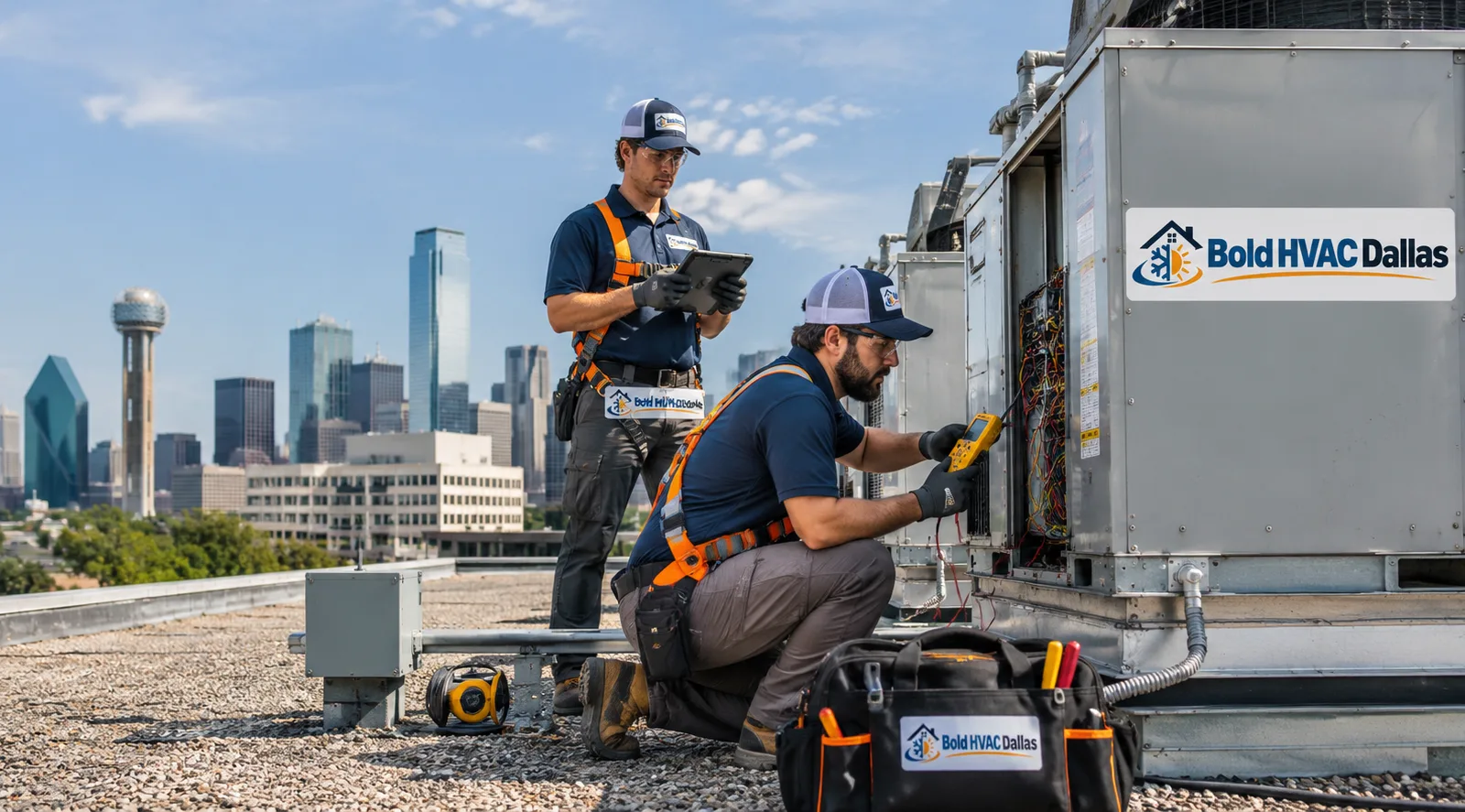
Commercial HVAC technicians inspecting packaged rooftop units on a Dallas office building with safety equipment and service tools

Commercial HVAC Service Built Around Your Facility

Businesses searching for commercial hvac contractors dallas tx need more than a quick equipment fix. The contractor must understand how operating hours, occupancy, ventilation, controls, and equipment condition affect the whole building. Bold HVAC Dallas evaluates those factors before recommending repair, replacement, or maintenance.

Our hvac service team serving the Dallas area works on commercial comfort systems with a clear process: verify the complaint, inspect the connected components, identify the cause, and explain the practical options. That may involve a packaged rooftop unit, split system, heat pump, make-up air equipment, economizer, thermostat, zone control, or building automation interface. Written scopes should identify the affected equipment, proposed work, exclusions, and expected scheduling so the facility team can make an informed decision.

Dallas heat places long, sustained demand on cooling equipment. Roof exposure can also make access and working conditions part of the service plan. A sound assessment considers condenser condition, refrigerant circuit readings, airflow, electrical components, filters, belts, drain lines, and controls instead of treating one symptom in isolation.

Complete facility support

Commercial HVAC Installation, Repair, and Maintenance

Diagnostics and Repair

Troubleshooting starts with the reported comfort problem and continues through the refrigeration, electrical, airflow, and control systems. Depending on the fault, work may involve contactors, capacitors, motors, belts, sensors, drain components, wiring, or refrigerant-side repairs.

Equipment Replacement

A replacement recommendation should account for load, efficiency, ventilation needs, curb or pad conditions, electrical service, controls, access, and business hours. Like-for-like tonnage is not automatically the right choice when occupancy or space use has changed.

New System Installation

Commercial installation may include rooftop units, split systems, heat pumps, duct connections, thermostats, zoning, condensate management, and start-up testing. The scope should coordinate equipment placement, lifting or roof access, utilities, controls, and commissioning.

Preventive Maintenance

Planned visits commonly cover filter condition, coils, belts, motors, drains, electrical connections, operating temperatures, refrigerant indicators, and thermostat or control operation. Findings should be documented so developing issues can be prioritized.

Indoor Air and Ventilation

Comfort complaints can result from airflow imbalance, outside-air settings, dirty components, pressure differences, or control problems. Testing the system as a whole helps separate ventilation concerns from mechanical cooling faults.

Controls and Zoning

Schedules, sensors, dampers, thermostats, and automation commands influence equipment operation. Control checks can reveal simultaneous heating and cooling, poor scheduling, sensor drift, or zones that never receive the intended airflow.

Facility-specific planning

Dallas Commercial HVAC Contractors for Different Building Types

Commercial buildings do not all place the same demands on HVAC equipment. Downtown Dallas offices may have tenant schedules, interior zones, rooftop access restrictions, and coordination requirements for occupied buildings. Deep Ellum restaurants and entertainment spaces can carry higher ventilation and heat loads, while service timing may need to avoid peak operating periods.

The Dallas Design District includes showrooms, studios, warehouses, and converted commercial spaces where ceiling height, loading access, and mixed-use layouts can affect equipment selection and air distribution. In North Dallas, larger offices and retail properties may rely on multiple rooftop units or zoned systems, making equipment identification and service records especially useful. Nearby industrial properties in Irving often require coordination around production areas, loading activity, and roof or equipment-yard access.

The right plan starts with the building's actual use. Dallas commercial HVAC contractors should ask about occupied hours, critical rooms, tenant complaints, recent layout changes, maintenance history, and any area that cannot tolerate downtime. Those details guide troubleshooting and help determine whether work can be staged to reduce disruption.

Commercial HVAC technician documenting model information and operating readings at rooftop equipment on a Dallas commercial property
Equipment identification and operating readings support accurate scopes and future maintenance records.
From assessment to follow-up

How Our Commercial HVAC Process Works

Check Availability
01

Discuss the Building and the Problem

We gather the site address, building use, occupied hours, affected areas, equipment information when available, and the symptoms noticed by staff or tenants. Access rules and scheduling constraints are addressed early.

02

Inspect and Test the System

The technician confirms the complaint and checks relevant components. Depending on the system, that can include temperature split, static pressure, electrical readings, coil condition, blower operation, filters, drains, refrigerant indicators, sensors, dampers, and control commands.

03

Present the Scope

The findings are separated into needed repairs, recommended maintenance, and longer-term concerns. If replacement is being considered, the proposal should cover equipment selection, installation requirements, controls, access, permits when applicable, and start-up.

04

Complete and Verify the Work

Work is coordinated around approved access and operating needs. After repair or installation, the affected equipment is tested under available conditions, control settings are reviewed, and the completed work is documented.

05

Plan Follow-Up Maintenance

A maintenance schedule can be organized by equipment type, operating load, environment, and manufacturer guidance. Service records make it easier to track repeat faults, aging components, filter needs, and budget priorities.

Get a documented assessment and a practical scope before a comfort problem turns into wider disruption for employees, tenants, or customers.

Call to Schedule
Measured findings and clear records

What to Look for in Commercial HVAC Contractors in Dallas

Start with commercial experience that matches the property. Ask who will diagnose the equipment, how findings are documented, and whether the proposal distinguishes required work from optional improvements. A credible contractor should be able to explain why a component failed, whether another fault contributed, and what testing will confirm the repair.

For replacement work, ask how capacity will be selected and whether ventilation, ductwork, controls, electrical requirements, roof curbs, drainage, and equipment access are included. Commercial systems should be sized from building conditions and load considerations, not chosen solely from the nameplate on the old unit. For rooftop replacements, confirm who coordinates lifting, roof protection, weather exposure, and any work performed by other trades.

Texas regulates air-conditioning and refrigeration contracting through the Texas Department of Licensing and Regulation. Property owners and facility managers should verify applicable licensing and insurance, request a written scope, and ask how permits or inspections will be handled when required by the City of Dallas. Warranty terms should identify covered parts, labor conditions, registration responsibilities, and exclusions.

Service communication matters too. A useful closeout identifies the unit worked on, records the repair, and notes any conditions that require monitoring. That information helps managers compare future recommendations and plan capital work instead of making repeated decisions without equipment history.
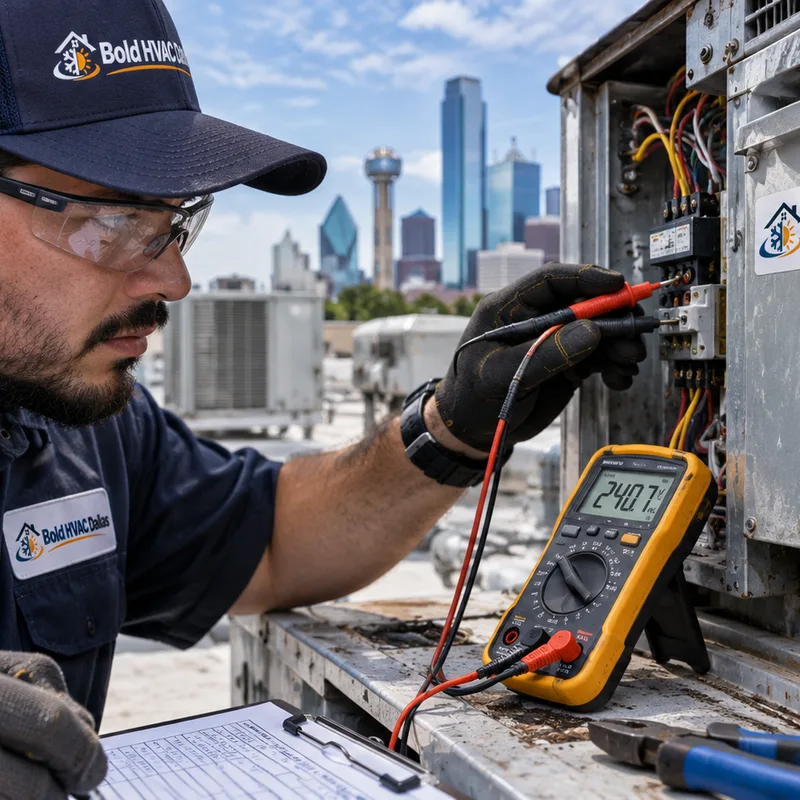
Commercial HVAC technician measuring electrical values and recording results at a labeled rooftop unit disconnect and control panel
Measured findings and clear equipment records support informed repair decisions.
Commercial pricing guidance

How Much Does Commercial HVAC Service Cost in Dallas?

Commercial HVAC service in Dallas typically starts around $150 to $500 for a diagnostic visit, while repairs may range from several hundred dollars to several thousand. Major rooftop-unit replacement often reaches $8,000 to $30,000 or more per unit, depending on capacity and installation conditions.

Final pricing changes with equipment type, parts, refrigerant, roof or crane access, controls, electrical work, permits, after-hours scheduling, and the number of units involved. These are general, nonbinding ranges. Exact cost is confirmed after an on-site inspection and written scope.

Check Availability
Documented preventive care

Maintenance That Supports Reliable Operation

Preventive maintenance is most useful when it produces actionable records rather than a simple pass or fail. Each unit should be identifiable by location or asset number, and the record should show what was inspected, what was measured, what was corrected, and what needs follow-up. This is particularly helpful for properties with multiple packaged units serving separate suites or zones.

Maintenance frequency depends on operating hours, equipment type, filter loading, outdoor exposure, tenant needs, and manufacturer requirements. A restaurant, medical office, retail store, warehouse, and conventional office may need different task lists even when their equipment appears similar. Filters and belts require direct inspection; a calendar alone cannot show their condition.

Commercial systems also benefit from seasonal planning. Cooling readiness checks should leave enough time to address damaged wiring, blocked coils, weak electrical components, drainage problems, or control faults before prolonged hot weather raises system demand. Heating checks should verify safe operation, sequencing, and controls before the building depends on them. The aim is to identify manageable work while there is time to schedule it.

Helpful answers

Questions About HVAC Commercial Contractors in Dallas

How quickly can a commercial HVAC contractor respond to a Dallas business?+

Response time depends on technician availability, site access, equipment type, parts, and whether the issue is an active loss of cooling or a scheduled concern. Provide the building use, affected areas, operating hours, unit information, and roof or mechanical-room access details when requesting service. Downtown Dallas properties may also require parking, loading, security, or building-management coordination before work starts.

Should I repair or replace a commercial rooftop unit?+

Replacement is usually considered when the unit has major component failure, recurring faults, poor condition, difficult parts availability, or a repair cost that is hard to justify against its remaining service life. The decision should also account for refrigerant type, efficiency, controls compatibility, curb condition, electrical needs, and how downtime affects the business. A written repair option and replacement scope make the comparison clearer.

How long does a commercial HVAC replacement take?+

A straightforward rooftop-unit replacement may be completed within a working day once equipment, permits, access, and lifting are arranged, but complex projects can take several days or longer. Curb adapters, duct changes, electrical work, controls integration, multiple units, restricted access, or occupied-space coordination add time. The schedule should separate preconstruction planning, installation, start-up, and closeout.

Do commercial HVAC projects in Dallas require permits?+

Many equipment replacements and mechanical installations can require permits and inspections, depending on the scope and jurisdiction. Work within Dallas should be reviewed against City of Dallas requirements, while properties in surrounding cities follow their own authorities. The contractor should state who is responsible for permits, inspections, and related documentation before work begins.

What should a commercial HVAC maintenance agreement include?+

A maintenance agreement should identify every covered unit, visit frequency, task list, filter responsibilities, documentation, exclusions, and how repair authorization is handled. It should also state whether coils, belts, drains, electrical components, operating readings, thermostats, dampers, and controls are inspected. Dallas cooling demand makes condenser condition, airflow, drainage, and electrical performance practical priorities.

Can commercial HVAC work be scheduled around business hours?+

Work can often be planned around business operations, but availability, access rules, noise, roof safety, weather, and equipment shutdown requirements affect the schedule. Restaurants may prefer work outside meal periods, while offices may need tenant notice for planned interruptions. After-hours work, crane activity, or building-security support should be identified in the proposal because these items can change cost and timing.

Plan the next step

Plan Your Commercial HVAC Work With Confidence

Tell Bold HVAC Dallas about the property, equipment, operating schedule, and current concern. We will help define the next inspection or service step and prepare a clear scope for the work.