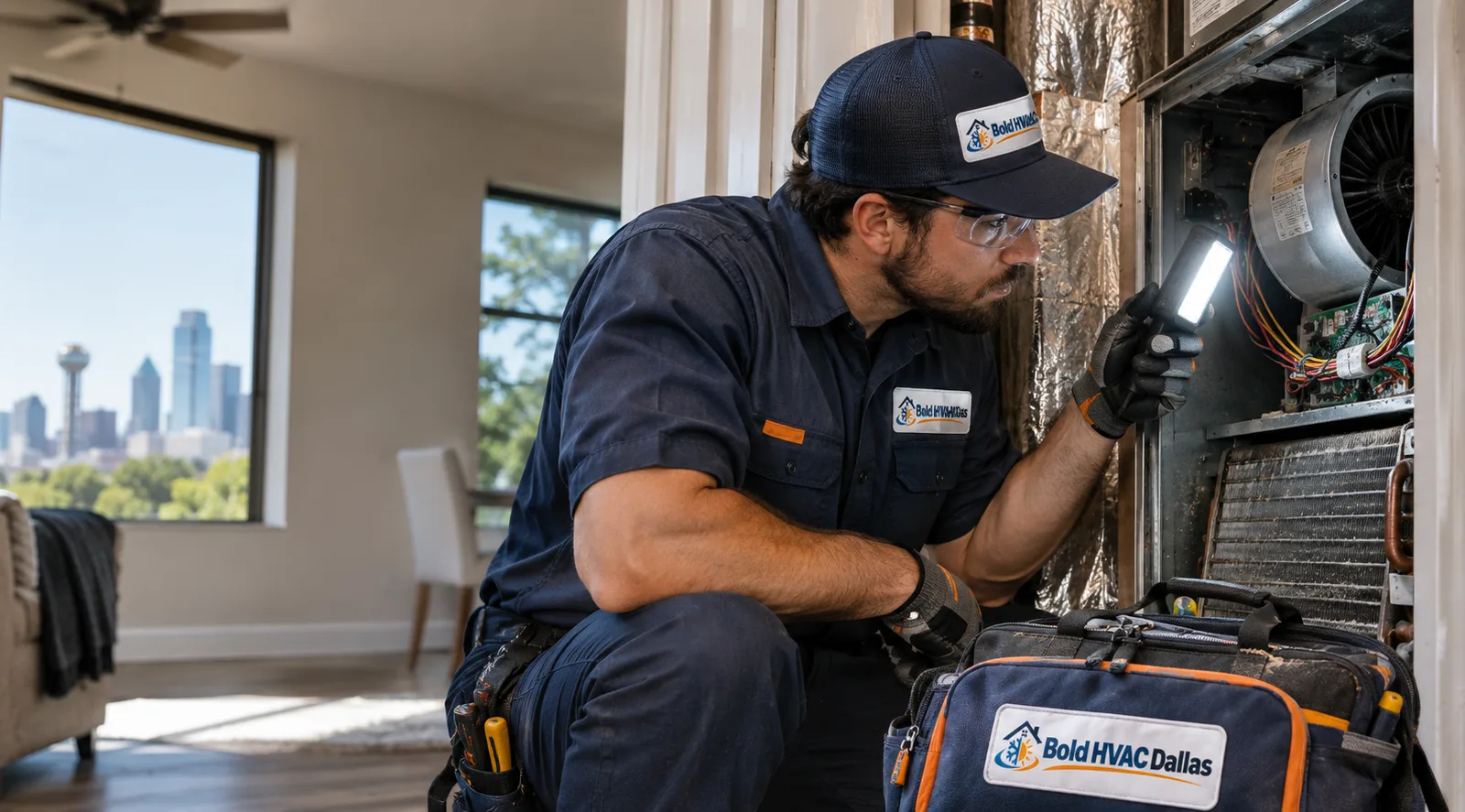
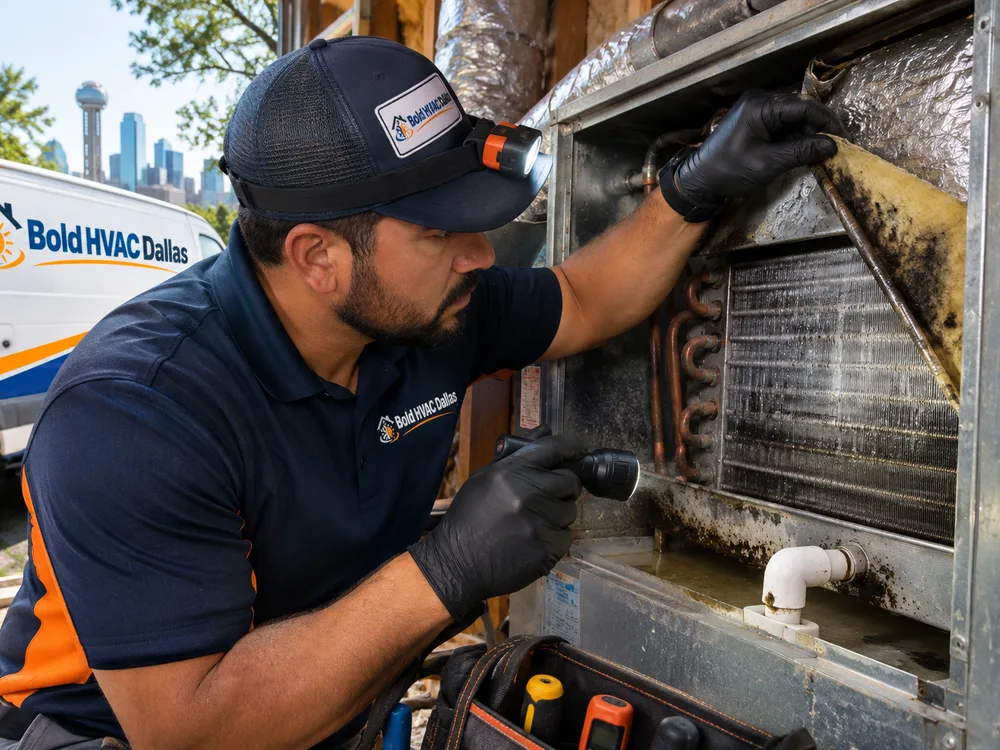
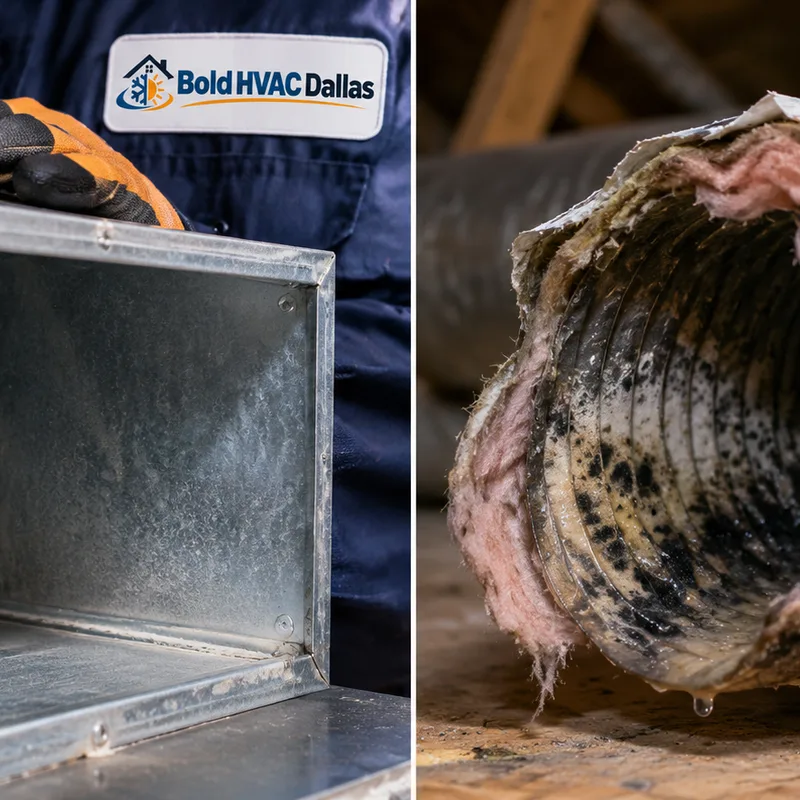
An HVAC mold inspection starts with the equipment and then follows the airflow path where access allows. The technician checks the air handler or furnace cabinet, evaporator coil area, blower compartment, supply and return plenums, accessible duct interiors, registers, filter rack, condensate pan, and drain line. Water staining, damaged insulation, settled debris, corrosion, and gaps around the return are documented because each can point to a moisture or filtration problem.
Visible growth does not reveal its species by appearance alone. If a customer needs laboratory identification, air or surface sampling should be performed under a defined sampling plan and interpreted with the building conditions. Testing is not automatically required when visible contamination and its source can already be documented. It also should not replace a physical inspection.
Odor location matters. A musty smell that appears only when the blower starts may justify checking the return path and air handler, while staining around one ceiling register can point to local condensation or an insulation defect. We use those observations to focus the inspection without treating an odor as proof of mold.