HVAC service in North Dallas

North Dallas HVAC Services

Practical heating and cooling care based on accurate diagnostics, clear recommendations and work suited to your property.

✓Residential HVAC care ✓Light commercial service ✓Repair, installation and maintenance
HVAC technician inspecting a residential outdoor condenser at a North Dallas home

Heating and Cooling Help Built Around the Problem

North Dallas HVAC service should begin with evidence, not a quick assumption. Bold HVAC Dallas evaluates the equipment, thermostat, airflow and operating conditions before recommending a repair, replacement or maintenance plan. That matters during long stretches of hot weather, when restricted airflow, dirty outdoor coils and weak electrical components can put added strain on an air conditioner.

Our HVAC service pros serving the Dallas area work on residential and light commercial heating and cooling needs with a direct process: identify the fault, explain the available options and complete the approved scope. Whether a system has stopped cooling, runs continuously, heats unevenly or makes an unfamiliar sound, the goal is to address the cause rather than replace parts without a sound diagnosis.

Service is available for central air conditioners, heat pumps, gas furnaces, air handlers, packaged equipment and ductless mini-splits. We also inspect related components such as condensate drains, capacitors, contactors, blower motors, filters, refrigerant circuits and accessible duct connections when they affect system operation.


Complete system support

Complete North Dallas HVAC Care

HVAC Repair

Troubleshooting for equipment that will not start, cannot hold the thermostat setting, cycles too often, trips a breaker, leaks water or produces weak airflow. Diagnosis may include temperature measurements, electrical testing, static-pressure checks and inspection of the refrigerant circuit.

System Installation

Replacement planning considers equipment condition, home layout, duct performance, efficiency ratings and load requirements. Proper sizing matters because an oversized unit can short-cycle, while an undersized unit may run for long periods without maintaining comfort.

Preventive Maintenance

Seasonal service can include filter review, coil inspection, drain clearing, electrical checks, thermostat testing and verification of cooling or heating operation. Findings are explained so you can plan repairs before a minor issue becomes a shutdown.

Indoor Airflow and Comfort

Hot rooms and uneven temperatures may come from duct leakage, closed dampers, restricted returns, poor balancing or equipment performance. The system needs to be assessed as a whole before a useful correction can be recommended.

North Dallas property care

HVAC North Dallas Properties Can Depend On

North Dallas includes properties with very different mechanical needs. Older homes around Preston Hollow may have additions, remodeled interiors or duct systems that have changed over time. Equipment selection in these homes should account for the present layout rather than relying only on the capacity of the old unit.

Far North Dallas has many established single-family homes where attic ductwork and long supply runs can affect room-to-room comfort. Townhomes and multifamily properties near Addison may have tighter equipment access, shared walls or limited condenser locations. Commercial spaces along the Dallas North Tollway may also need service scheduled around customers, tenants and business operations.

Local weather adds another consideration. Dallas summers bring sustained cooling demand, while winter cold fronts require dependable heat even when heating equipment sees less annual use than the air conditioner. A useful maintenance plan accounts for both seasons and tests each operating mode before peak demand.

Technician checking HVAC gauges and electrical readings at an established North Dallas residence
Property layout, equipment access and duct conditions all shape a useful service plan.
Practical equipment planning

Repair or Replace? Start With the Equipment Condition

Replacement is not automatically the right answer when an HVAC system fails. A repair may be reasonable when the fault is isolated, replacement parts are available and the rest of the equipment is in serviceable condition. Common repairable problems include failed capacitors, worn contactors, clogged condensate drains, thermostat faults and some blower or fan motor failures.

Replacement deserves consideration when equipment has repeated breakdowns, a major component has failed, corrosion or refrigerant loss is extensive, or the system cannot meet the building's comfort needs. The condition of the indoor coil, outdoor unit, furnace or air handler, electrical supply and ductwork all affect that decision. For split systems, component compatibility also matters. Indoor and outdoor equipment must be properly matched for capacity, refrigerant type and rated performance.

An installation should be based on load calculations and actual property conditions. Manual J is the accepted residential method for estimating heating and cooling loads. Duct capacity and static pressure should also be considered because new equipment cannot correct undersized, damaged or badly restricted ducts by itself. Bold HVAC Dallas explains whether targeted repair, system replacement or supporting duct corrections make the most practical sense.

Check Availability
From symptoms to verification

What to Expect During HVAC Service

Check Availability
01

Discuss the Symptoms

We start with what you have noticed, when the problem began and whether it affects the entire property or certain rooms. Recent electrical work, renovations, filter changes or previous repairs can provide useful clues.

02

Inspect and Test

The technician checks the thermostat, equipment condition and relevant operating measurements. Depending on the complaint, testing may cover voltage, amperage, temperature split, airflow, safety controls, drainage and refrigerant performance.

03

Review the Findings

You receive an explanation of the diagnosed issue and the work recommended to correct it. If the equipment has other visible concerns, those are separated from the immediate repair so you can make an informed choice.

04

Complete and Verify the Work

After approval, the technician performs the agreed work and tests the system again. Verification may include a complete operating cycle, thermostat response, supply-air temperature and drainage.

Measured seasonal care

Maintenance That Goes Beyond a Quick Look

Good HVAC maintenance is a measured inspection, not a visual glance at the equipment. On a cooling system, service may include checking the condenser coil, electrical connections, contactor and capacitor, condensate drain, blower operation, refrigerant performance and the temperature difference between return and supply air. Heating checks depend on the equipment and may include ignition, flame sensing, heat-strip operation, safety controls and signs of combustion or venting problems.

Filter condition is also important, but the correct filter is not always the thickest or highest-rated option available. A filter that creates excessive resistance can reduce airflow. The appropriate size and efficiency depend on the return design, filter cabinet and blower capacity.

Plan cooling maintenance before heavy summer use and heating maintenance before colder weather. If service uncovers weak components, drainage trouble or abnormal operating measurements, you have time to address them before the system is working under peak demand.

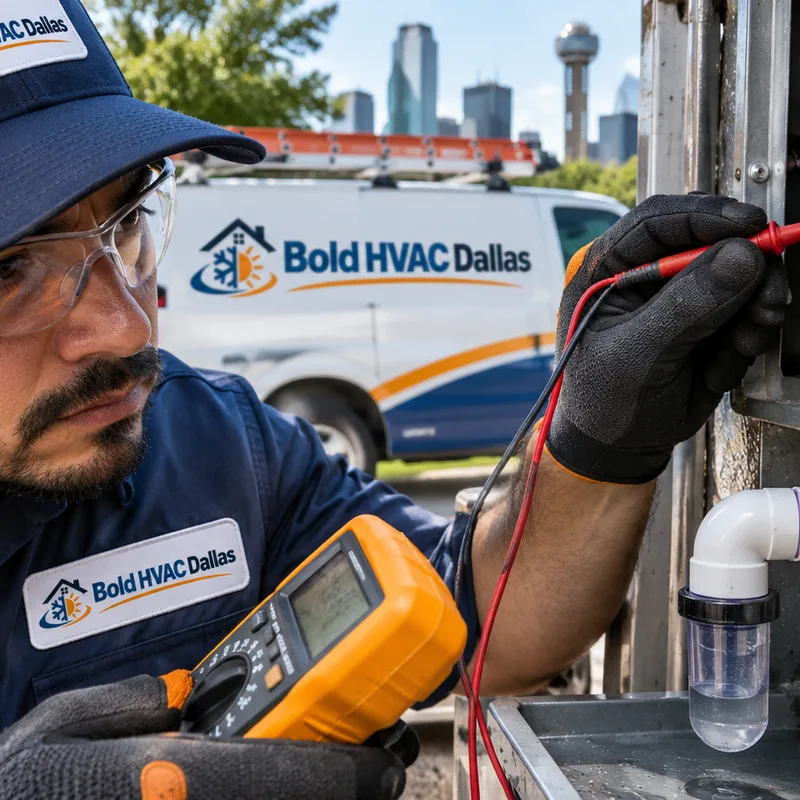
HVAC technician measuring electrical components and inspecting a clean condensate drain assembly
Measured maintenance checks operation, drainage, electrical condition and airflow before peak demand.

If your system is struggling, leaking, making unusual noise or leaving rooms uncomfortable, schedule a diagnostic visit before continued operation causes more damage.

Call to Schedule
Helpful answers

North Dallas HVAC Questions

How quickly can a North Dallas HVAC repair be completed?+

Many common HVAC repairs can be completed during one service visit when the required part is available. Diagnostic time and repair time vary with equipment access, system type and the fault. Compressor problems, refrigerant leaks, control-board issues and hard-to-source components may require additional testing or a return visit. North Dallas properties with attic equipment or restricted mechanical closets can also take longer to access safely.

What affects the cost of HVAC service in North Dallas?+

The main cost factors are the diagnostic work, failed component, equipment type, part availability, refrigerant requirements and access conditions. A clogged drain or failed capacitor is a different scope than a blower motor, evaporator coil or compressor replacement. The exact cost should be based on the diagnosed fault and approved scope rather than the symptom alone.

Should I repair or replace an older HVAC system?+

Repair is often suitable when the problem is limited and the rest of the system remains dependable; replacement becomes more reasonable when failures repeat, major components are deteriorated or comfort remains poor after repairs. North Dallas cooling systems can accumulate substantial run time during hot weather, so age should be considered alongside coil condition, compressor performance, refrigerant type, repair history and ductwork.

How long does an HVAC replacement take?+

A straightforward residential changeout is often completed within one working day, while duct changes, electrical corrections, difficult access or equipment relocation can extend the schedule. Before work begins, the scope should identify the indoor and outdoor equipment, thermostat needs, drain work, equipment pad or mounting requirements and any accessible duct transitions.

Why is my air conditioner running but not cooling the house?+

An air conditioner can run without cooling properly because of restricted airflow, a dirty coil, an electrical fault, a failed outdoor fan, low refrigerant charge or compressor trouble. In Dallas heat, a system may also run for long periods when the cooling load is high, but it should still produce a meaningful temperature drop across the indoor coil. Operating measurements are needed to separate normal extended runtime from a mechanical problem.

Can a larger HVAC unit fix hot rooms?+

A larger unit is not a reliable fix for individual hot rooms and may create short cycling or humidity problems if it is oversized. Uneven comfort often points to duct restrictions, leakage, inadequate return air, poor balancing, insulation differences or solar heat gain. The load and airflow should be evaluated before changing equipment capacity.

What should be checked before installing a new system?+

A new HVAC installation should account for heating and cooling load, duct capacity, static pressure, electrical requirements, drainage and matched equipment ratings. For North Dallas homes with attic ductwork, accessible ducts should also be checked for disconnections, damaged insulation and restrictive transitions. Equipment efficiency cannot compensate for major airflow defects.

How often should HVAC maintenance be scheduled?+

Cooling and heating equipment should be inspected before the seasons when each mode will carry its heaviest load. In North Dallas, that generally means preparing the air conditioner ahead of sustained summer demand and testing the heating system before winter cold fronts. Filter replacement frequency depends on filter size, household conditions, return design and equipment use.

Plan the next step

Get a Clear Plan for Your Heating and Cooling System

Tell Bold HVAC Dallas what the system is doing and arrange an assessment. You will receive findings tied to the equipment's condition, plus practical options for repair, installation or maintenance.