Visible Debris at Registers
Dust on a grille alone may come from the room, but clumps or construction debris visible inside supply or return openings justify an inspection of the duct system.
Serving Dallas, Texas & surrounding areas
24/7 Emergency Response
Remove accumulated dust and debris from your supply and return ductwork with a careful process built around cleaner components, protected interiors, and clear communication.
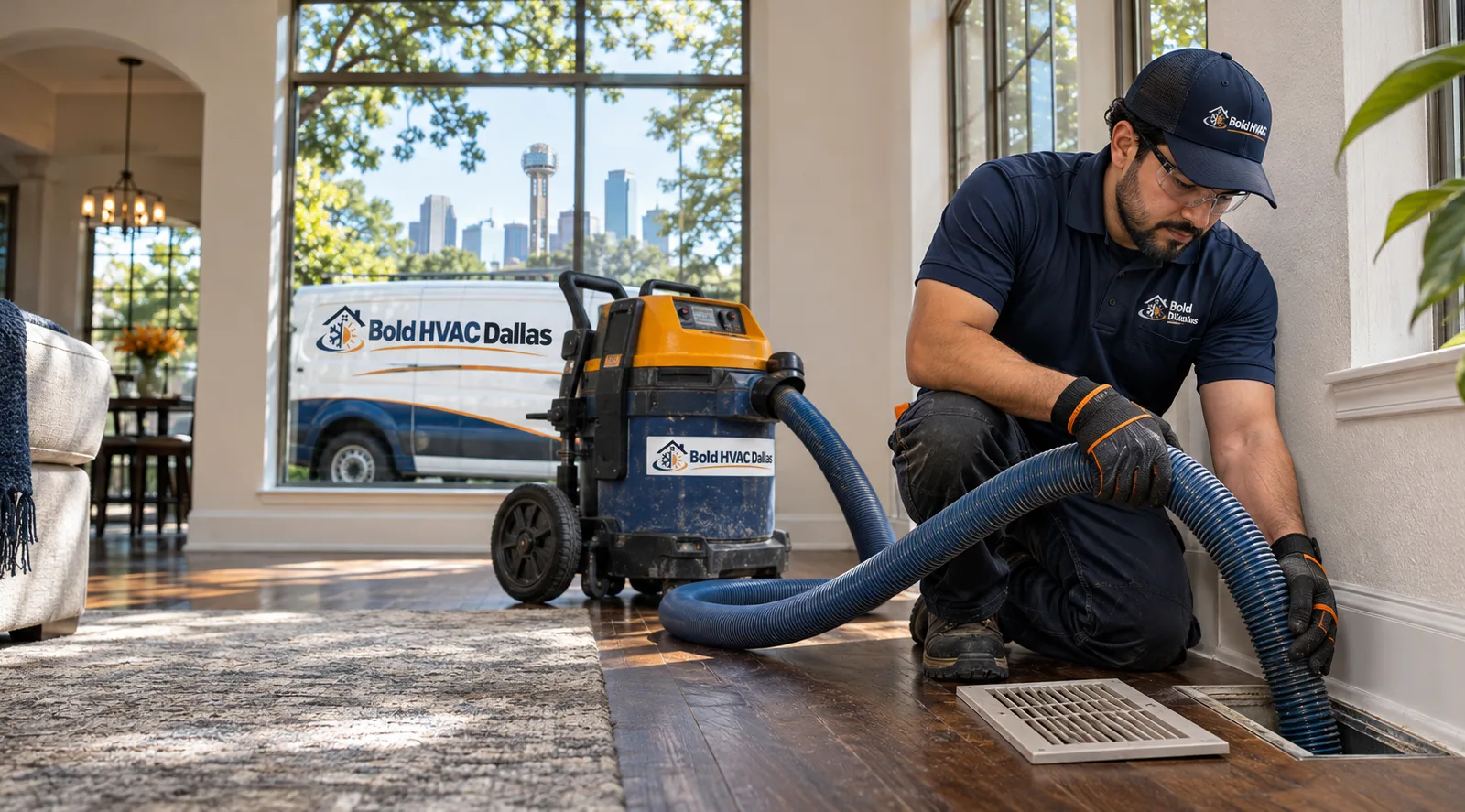
A professional air duct cleaning service Dallas homeowners can trust should address the accessible supply and return duct system, not simply vacuum the register openings. Bold HVAC Dallas inspects the system, explains the recommended scope, protects nearby floors and furnishings, and uses controlled agitation with negative-pressure collection to remove loosened material.
Dallas conditions can put HVAC systems through long periods of operation. Hot summers mean extended cooling cycles, while spring pollen and dust tracked indoors can collect in return grilles, filters, and ductwork. Cleaning cannot stop outdoor particles from entering a building, but it can remove debris already present in accessible duct components. It may also address material left after remodeling, pest activity, or years of occupancy.
With attention to register removal, equipment access, duct material, and the condition of the air handler, Dallas' HVAC service specialists perform the work based on a defined cleaning scope and what the system actually needs, rather than broad claims about indoor air quality.
A complete scope starts with the supply and return sides of the forced-air system. Technicians inspect accessible duct runs and identify whether they are sheet metal, flex duct, or internally lined duct. That distinction matters. Metal ducts can tolerate different agitation methods than flexible or lined materials, which require gentler tools to avoid tearing, crushing, or damaging the inner surface.
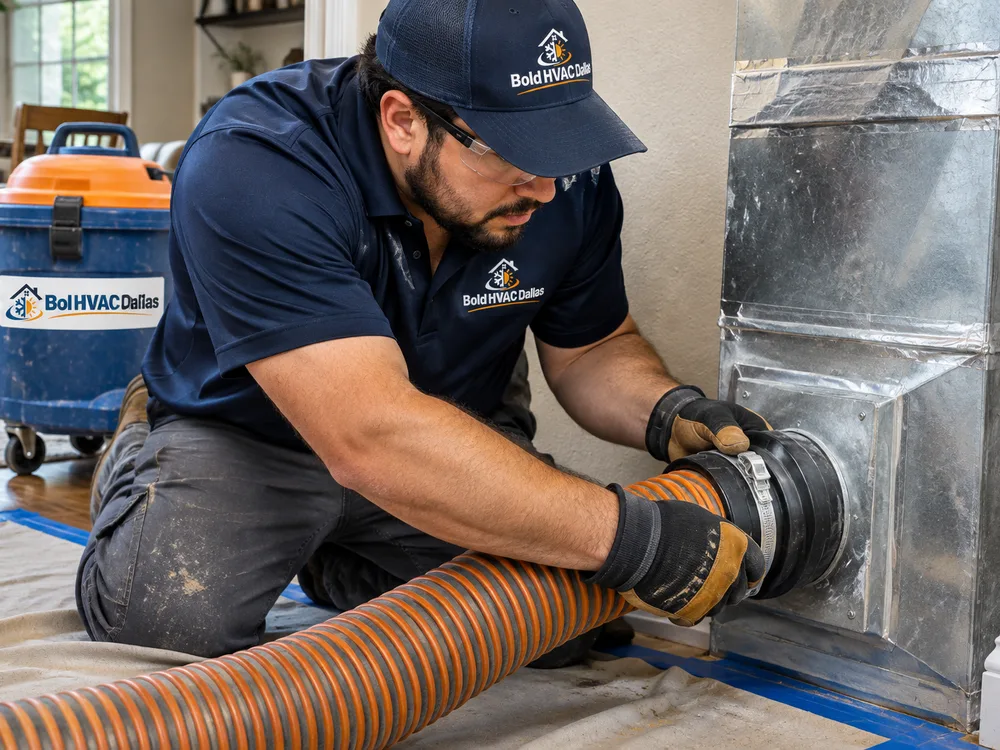
The system is placed under negative pressure with collection equipment so loosened debris moves toward containment. Agitation tools may include rotating brushes, air whips, or compressed-air devices selected for the duct construction. Registers and grilles are cleaned separately, and access openings created for the work should be closed after cleaning with suitable plugs or sheet-metal patches.
The service may also include accessible blower-compartment and air-handler surfaces when those items are part of the agreed scope. Evaporator-coil cleaning, drain work, repairs, sanitizers, and replacement filters are separate considerations and should be clearly identified before work begins. A reputable proposal states which components will be cleaned instead of relying on a vague whole-system promise.
Dust on a grille alone may come from the room, but clumps or construction debris visible inside supply or return openings justify an inspection of the duct system.
Drywall sanding, flooring work, and demolition create fine particles. If returns were open or the HVAC system operated during construction, debris may have entered the ductwork.
Rodents or insects in ducts require the source to be corrected first. Damaged or contaminated duct material may need replacement rather than cleaning.
Particles repeatedly leaving supply registers can indicate loose debris, deteriorating internal duct liner, a filtration problem, or another condition that should be identified before cleaning.
An inspection can help after a move when the duct condition and prior remodeling history are unclear. Cleaning should follow visible evidence, not the age of the home alone.
Heavy debris is one possible cause, but closed dampers, crushed flex duct, leaks, equipment issues, or an overloaded filter can produce similar symptoms. Diagnosis comes first.
We review accessible supply and return components, note the duct material, and look for visible debris, moisture, damage, or conditions that require correction before cleaning.
You receive a clear description of the components included, access requirements, equipment placement, and any separate work that may be recommended.
Nearby floors and furnishings are covered as needed. Registers are removed carefully, and collection equipment is positioned with attention to interior finishes.
The duct system is connected to professional collection equipment. Openings are managed so dislodged material is drawn toward containment rather than released into occupied rooms.
Appropriate brushes, whips, or air tools loosen material within accessible ducts. Tool selection depends on whether the system uses metal, flexible, or lined ductwork.
Access points are closed, registers are reinstalled, and the immediate work area is cleaned. We review observations that may require filtration changes, repair, or further evaluation.
Dallas properties do not share one duct layout. In Lakewood, older homes may have HVAC systems added or altered during later renovations, so access and duct transitions deserve close inspection. Oak Cliff also has many established homes where remodel history can produce mixed duct materials or abandoned runs. In newer Far North Dallas houses, long flex-duct runs in attic spaces may require careful handling to prevent compression or damage.
Uptown condos and apartments introduce different constraints. Shared-building rules, parking, elevator access, equipment transport, and responsibility for common mechanical components may need to be confirmed before scheduling. Downtown commercial and mixed-use buildings can have larger systems, restricted service hours, or building-management requirements that differ from a detached home.
Attic conditions matter across North Texas. Duct access can be limited by insulation, framing, low clearances, and summer heat. Those factors affect equipment setup and working time. They also make it important to distinguish removable debris from damaged insulation, disconnected ducts, air leakage, or deteriorated liner. Cleaning will not repair those defects.

Residential air duct cleaning in Dallas typically costs about $450 to $1,000 for one HVAC system, while larger homes, multiple systems, difficult attic access, or extensive contamination may cost more. Small advertised prices often cover only a limited number of vents rather than the full supply and return system.
Final price depends on system count, register count, duct material, accessibility, debris level, equipment components included, and whether special containment is needed. Repairs, coil cleaning, and antimicrobial products should be priced separately. The exact cost is confirmed after the system and requested scope are reviewed.
Air duct cleaning removes accessible dust and debris from the components included in the scope. If buildup is contributing to a physical restriction, removal may help restore airflow through that area. Cleaning can also clear renovation debris and other loose material that should not remain inside the system.
It is not a cure for every comfort or air-quality concern. Uneven room temperatures can result from poor duct design, leakage, closed dampers, inadequate return air, insulation issues, or equipment performance. Persistent dust may come from air leaks, an ill-fitting filter, frequent door traffic, pets, or particles generated indoors. Moisture must be traced to its source. Wet or mold-damaged porous duct material may require removal and replacement rather than surface treatment.
Be cautious with automatic recommendations for fragrances, sealants, fogging, or antimicrobial chemicals. Any product should be suitable for the specific HVAC application, used according to its label, and proposed for a documented reason. Source correction, dry components, sound ductwork, and proper filtration matter more than masking an odor.
If you can see debris inside the ducts, recently completed dusty construction, or need the condition of an unfamiliar system assessed, arrange an inspection and receive a defined scope before cleaning begins.
Call to ScheduleA typical single-system home often requires several hours, although the actual time depends on register count, system layout, access, and debris level. Multiple HVAC systems, attic restrictions, or components that need separate attention extend the visit. Uptown condos may also require additional setup time for parking, elevators, and building access.
Air ducts should be cleaned based on observed conditions rather than a fixed annual schedule. An inspection is reasonable when there is visible debris inside ducts, material blowing from registers, confirmed pest contamination, or dust-producing renovation work that entered the system. Routine filter replacement and source control are more appropriate when the ducts are not visibly contaminated.
Duct cleaning can remove accumulated material inside the cleaned components, but it cannot eliminate every source of household dust. Dallas homes also receive outdoor pollen and soil particles through doors, windows, clothing, and air leaks. Filter fit, duct leakage, return-air pathways, housekeeping, pets, and indoor activities can all affect how quickly dust returns.
Flexible ductwork can often be cleaned when it is intact, accessible, and suitable for gentle agitation. Aggressive brushes can damage its inner liner, and compressed or torn flex duct should be repaired or replaced instead. This is especially relevant for Dallas homes with long attic runs, where heat exposure, tight bends, and foot traffic around the ducts can affect their condition.
Accessible air-handler and blower components should be evaluated because cleaned ducts can be re-exposed to debris left elsewhere in the air path. Whether those components are included must be stated in the proposal. Coil cleaning, drain-pan work, and mechanical repairs may require separate procedures and pricing.
Occupants can often remain at home, but equipment noise, room access, pets, children, or sensitivity to disturbed dust may make leaving more comfortable. The technician needs unobstructed access to registers, return grilles, the air handler, and planned equipment routes. Building rules may add requirements for condos or managed properties.
Cleaning may remove surface material from suitable nonporous components, but moisture must be corrected and contaminated porous duct material may need replacement. A visual resemblance is not enough to identify mold. Condensation, roof leaks, drain problems, or humid air entering through duct leaks should be addressed before cleaning so the condition does not return.
Clear reasonable access to supply registers, return grilles, thermostats, and the indoor HVAC equipment before the appointment. Secure pets, move fragile objects near registers, and share any parking, gate, elevator, or building-management instructions. If remodeling caused the concern, identify which rooms were affected and whether the HVAC system ran during the work.
Tell Bold HVAC Dallas what you have noticed, including visible debris, recent construction, airflow concerns, or an unknown maintenance history. We will help define the right inspection and cleaning scope for your system.